Browse all resources
Thank you! Your submission has been received!
Oops! Something went wrong while submitting the form.
Lead Generation
Lead Generation vs. Lead Capture
Lead generation is a myth for home service businesses. In this episode, why advertising to capture leads doesn't work and why brand building is the only strategy that earns customers before they need you.
Somewhere in the back of your operation, there's supposed to be a machine.
You plug it in. It hums. Out come the customers, like a gumball machine, but for people who need a new water heater.
That machine doesn't exist.
In Episode 36 of Advertising in America, Ryan Chute, Chris Torbay, and Mick Torbay take apart one of the most expensive myths in modern marketing: that leads can be generated on demand. They can't. The weather makes the lead. The broken furnace makes the lead. Your only job, the only thing advertising has ever been able to do, is make sure it's your name they reach for when it happens.
From grudge purchases versus identity purchases, to the 95/5 rule, to why Google's Zero Moment of Truth is actually the last moment of truth, this episode hands essential home service operators a clear framework for understanding where their marketing dollars actually go and what they're actually buying.
Episode Highlights:
- The Gumball Machine Fantasy: Why "lead generation" is a myth and why your vendors profit from you believing it
- Grudge Purchase vs. Identity Purchase: Why furnaces aren't yoga pants, and why that changes your entire advertising strategy
- The 95/5 Rule: At any given moment, only about 5% of your market is actually shopping. Who's getting them?
- Lead Capture vs. Lead Generation: The four thresholds every customer crosses before they pick up the phone
- What Lead Gen Actually Is: Brand building, sales activation, and 30 years of Binet & Field data
- Google's Hallway Problem: Why all the doors look the same, and what makes yours different
- The Zero Moment of Truth Myth: Why Google took credit for work your brand already did
- Pay-Per-Click Equity: Spoiler: it doesn't exist. Here's where yours is actually going.
🎧 If your phone rings when the furnace dies, you didn't generate that lead. You captured it. This episode shows you how to make sure it's always your name they reach for before the cold snaps, not after.
👉 Are you building a brand, or just renting space in a hallway where all the doors look the same?
On this episode of Advertising in America, we're talking about lead generation versus lead capture.
I don't think there's any such thing as lead generation, and deep down, I don't think clients do either. But the problem is they use this grammatically incorrect term so often their brains actually start to think it's a real thing.
Lead generation suggests you can generate a lead, make someone who is not interested in your product or service. That doesn't happen.
It's possible I'm going to get myself in trouble here, if only due to differences in terminology. Ferrari can generate leads. They can take someone who doesn't want a Ferrari, put them in a Ferrari on a racetrack, and now you've just generated a lead in the form of a guy who wants to buy a Ferrari.
If you're in the air conditioning business, lead generation is going around a neighborhood and smashing up all the air conditioners with a sledgehammer. Congratulations. You just put all of those homeowners in the market for a new AC. That's lead generation.
Ryan Chute: And out of the gate, I got a problem, because those sound like the same thing, wearing two different hats, like couch and sofa, or pop and soda. Like my wife saying, "I'm fine," and my wife saying, "I'm fine."
See, I always figured lead generation was a machine somewhere in the back where you plug it in, it hums a little, and out come the customers, like a gumball machine, but for people who need to sell water heaters. Turns out one of these things is real, and one of them is mostly a fella in a trench coat trying to sell you something, and I've apparently been buying the wrong ones for years and feeling pretty good about it. Chris says he can sort it out. Chris says a lot of things, though... What you got?
Chris Torbay: I don't think there's any such thing as lead generation, and deep down, I don't think clients do either. But the problem is, they use this grammatically incorrect term so often, their brains actually start to think it's a real thing. And like Big Brother in 1984, I'm here to take this word out of your vocabulary so you no longer have those thoughts. Sorry, there is one 20th century literature scholar out there who understood that reference, and they totally appreciate it. I thank you for listening, ma'am.
Lead generation suggests you can generate a lead, make someone who is not interested in your product or service interested in your product or service.
In almost every category and almost every scenario, that doesn't happen. If someone doesn't want to buy something, good advertising can't make them buy it, even from you, even with a good ad. Advertising can make you the brand they instinctively go to when they want that thing, but you can't make them want it.
Jewelry stores need to know that the thing that generates leads in the engagement ring business isn't advertising; it's falling in love. Advertise all you want, but until someone finds themselves so much in love that they want to get married, you're gonna have a hard time selling the rings until they become a lead.
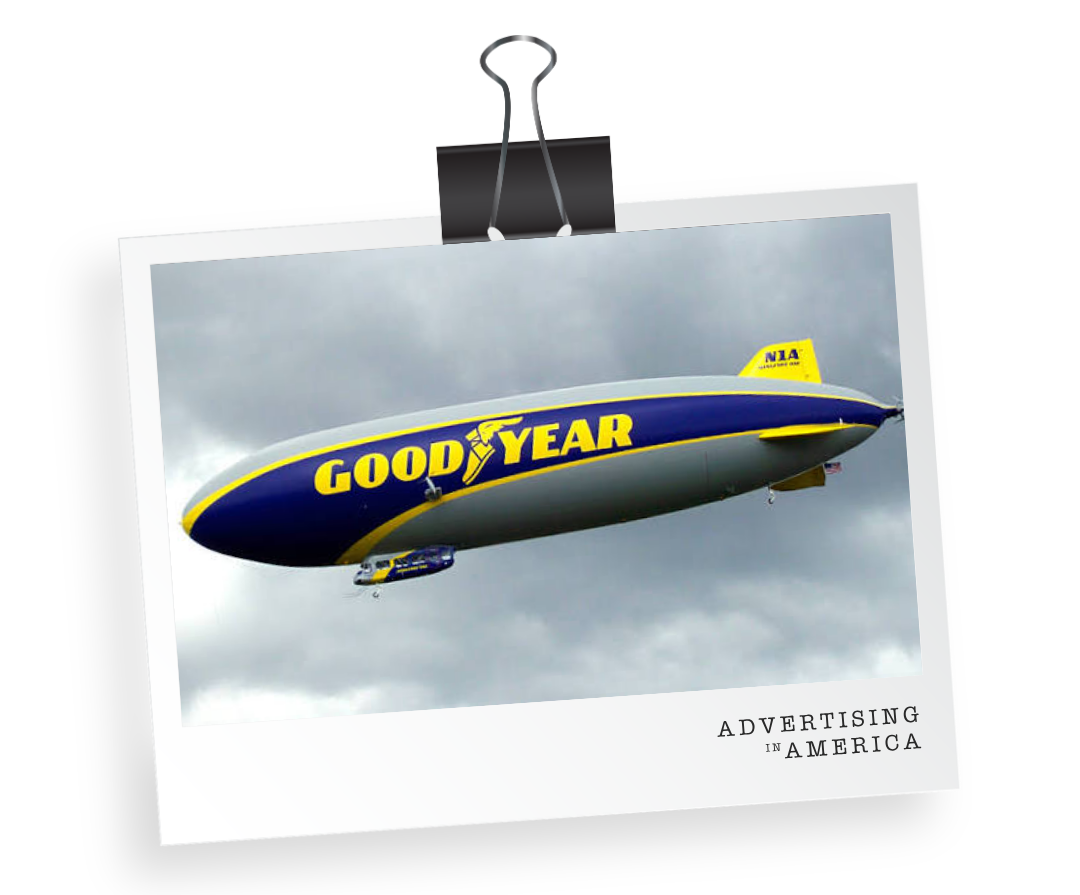
Home services companies need to know that the thing that generates leads in the air conditioner business isn't advertising; it's hot weather. Advertise all you want, but until it gets hot, people won't budge on a new air conditioner. I wrote commercials for a Goodyear dealer up in Canada a few years back, a client of Mick’s actually, and every fall, she'd ask for ads encouraging people to come and get their snow tires on before the big rush in November. Crickets every year. First snowfall comes, suddenly everyone in town was ringing her phone off the hook to get their snow tires. Advertise all you want; you cannot generate the lead. Now, what advertising can do is make you the one who gets that lead when it generates itself. When everyone scrambled to get their snow tires on the day after that first snowfall, all that advertising made her get the most calls.
My job isn't lead generation; it's lead attraction. Thanks to my work, there are brands that will now attract a person when they become a lead, or probably before they're a lead, but you don't get to enjoy it until they finally become one. There is a beer that you would like right now if you were ready for a beer. There is a sports car that you would buy right now if you suddenly had the cash to blow on a sports car and had your wife's permission. There is a toothpaste or a snack food or a fabric softener that you would totally put in your cart right now, but only if that need had arisen, not before. There are exceptions, but they only prove the rule.
A couple of episodes back, I was the guy who brought in that wacky little credit card thingy that turns into a cell phone tripod. I saw the ads for that, and I had to have one. They generated a lead out of thin air. Never happens. Proves my point. Be the brand that takes up a position in people's minds before they need what you sell. Make them like you. Make them remember you. Get them to remember how to find you in the future, and one day when they become a lead, that lead will come to you.
Ryan Chute: Lead attraction. I like that. Sounds a whole lot better than what my dating years ran on, mostly lead avoidance. Chris, you brought up the snow tire lady. That's Mick's client. So either Mick's about to back up the whole story, or we're fixing to learn these two share clients the way that my kids share the one French fry, badly and with violence. Mick, same question. What you got?
Mick Torbay: It's possible I'm going to get myself in trouble here, if only due to differences in terminology.
And on this program, we have two marketing guys, advertising guys, really, and we have a sales expert. And we sometimes use the same words or phrases that mean different things in our respective worlds, and we each think we're right. So I'll define it my way, and these other idiots can say stuff that's wrong.
From my perspective, lead gen, lead generation, is a misnomer. It suggests a lead can be generated, like electricity. There's no lead; nobody wants to buy what you sell. I turn this handle; now there's a lead. Somebody wants to buy what you sell. That's horseshit, if you'll pardon my equestrian reference.
What sort of business are you in? Most people watching this program are providing products and services to families and homeowners across America, and for the most part, the things they want to buy, the things you sell, are not things they actually really want to buy. Air conditioners, roofs, water heaters. Grudge purchases. Let's not confuse that with a flashy new shirt or a Ferrari. Ferrari can generate leads. They can take someone who doesn't want a Ferrari, put them in a Ferrari on a racetrack, and now you've just generated a lead in the form of a guy who wants to buy a Ferrari.

If you're in the air conditioning business, lead generation is going around a neighborhood and smashing up all the air conditioners with a sledgehammer.
Congratulations, you just put all of those homeowners in the market for a new AC. That's lead generation. It's noisy, and it's illegal, but it's totally achievable if you're that kind of business owner. If you're not prepared to do that, then let's talk about something that's actually possible: lead capture.
That's acknowledging that there are a certain number of people in the market right now. It varies with seasonality and local weather and market conditions, but for the most part, you really can't change that number. However, you can capture them. That's what advertising can do. Convert someone from "I want to buy something, to "I want to buy something from you."
But remember, they already wanted to buy something. Create a powerful ad campaign that makes consumers remember you, like you, feel good about you, and think of you first, and then when they find themselves in the market, they become really easy to capture. Hell, they might even fall into your lap. Ryan could teach you how to reel them in. But reeling is easier when you're already inclined to jump into the boat. Anyone who says they're going to generate leads, I'd make sure you're talking about the same things. Is this guy a thug with a sledgehammer? Okay, that might work. If he's not, make sure you define your terms. One of these plans has a clear path to making you money.
The other could be a load of horseshit.
Ryan Chute: Mick says I could teach you how to reel them in. That's about the nicest thing he's ever said to me, and he said it directly between a story about smashing air conditioners with a sledgehammer and the word horseshit. Thanks, Mick. Compliment, felony, compliment? We'll be right back.
Ryan Chute: We're back. So both fellas coming in from two different doors just told you the exact same thing. You cannot generate a lead. You can only get good enough that the lead picks you, which means the whole ballgame is what's happening way before anyone gets shopping. Let's pull that apart.
Mick Torbay: So two marketing guys using sales terminology. Are we getting ourselves in trouble here? Like, how close we were, how close were we?
Ryan Chute: The thing is that it's not really sales terminology if we go back to Binet and Field. Binet is talking about brand-building, and we have digital marketers who are talking about lead generation, and that's really what's confusing today. Most people think lead gen, brand-building- you gotta do one or the other. You could maybe do a little, and if I do a truck wrap, I've got my brand done and a little bit of community work. No, that's just not how it works, right?
Lead gen is the brand-building and sales activation stuff that Binet and Field talk about, and then it's the lead capture stuff that we start getting into when we talk about the infrastructure, the nuts and bolts of what it is that we're actually creating a presence with both online and offline. There are really only four thresholds. Two of them are on, two of them are off. Phones, SMS, text messages, then emails and form fills. Those are the only ways that people can contact you or step over the threshold, as it were, to get into lead capture mode. Everything else is that door. I think of it like The Matrix. You remember the scene where he passes out of the Oracle's apartment building, and he walks into this hallway of white, both directions, and it's doors in front of him. Just nothing but doors, right? But all the doors look exactly the same.
And that's Google. When you walk up, and you look like everyone else, what's the discerning factor? Maybe there's a ding on the door, a little one; one of the doorknobs is brass. That's not enough to
Mick Torbay: make a decision ...
Ryan Chute: <ake a good decision. That's not branding.
Mick Torbay: I kinda look at the w-y people sell lead gen; at the risk of getting very meta here, calling it lead gen is an excellent marketing example.
Chris Torbay: It sounds very attractive, yes. Can you do that for me?
Mick Torbay: ... for a sales tool. Yes, in a sense, what they've done is they have found the felt need. I look at the title or the name Lead Gen as an example of a good marketing way of selling a sales tool. They found the felt need. What the business owner wants is leads, targeted leads. Good leads. The Glengarry leads. So if I say, "I will give you qualified leads," that business owner's "That's exactly the fuck what I want. How much money can I throw at you to give me that?"
And is anybody saying, “No, that's not a thing"? I literally get emails weekly saying, "I run a lead company," and your LinkedIn profile will tell people that I'm a copywriter, and I write commercial. They're like, "So you're looking for clients? We can deliver 100 qualified leads a week for this much money." It's like, okay, I work with owner-operated businesses between $5 million and $200 million. I'm basically operating to capacity now. I'm not taking on new clients at the moment. You can't do that. Fuck you. There are no 100 leads that are what I'm looking for available. I don't care who you are; you cannot deliver that. And yet that's exactly what they're promising. If I were in a position where I really desperately wanted the phone to ring, I would find that very attractive.
Chris Torbay: But the problem is it is the semantics of the word. Like, all the things you just said, that's lead delivery. That's lead sniffing out. That's lead stealing leads from other people and giving them to you. The problem is, at some point, one of these sales companies used the word generation, and it makes it sound like we can make you a lead. It's like, no, we can borrow the lead that was gonna go somewhere else, or we can find where the leads- steal ones from somebody else, or are looking around on their own- and we can point them to you. But what we can't do is generate them.
And then the problem is clients suddenly do take the word generation literally. And if it's the beginning of summer, and it hasn't gotten hot yet, and they got a bunch of air conditioning installers sitting around with nothing to do, they come to us and say, "Can you generate some leads?" You cannot generate some leads. You gotta wait until it gets hot, and those leads are out there, and we can swipe them.
Mick Torbay: But if you could, you wouldn't have to do all the bullshit we do. If you could just make the phone ring, like, building a brand is hard. It takes time, and it's expensive. If you could skip that and go straight to just the phone rings because you generated a lead, why the hell wouldn't you do that?
Ryan Chute: The truth of it is, and I'll go back to the Binet and Field study that ran over 30 years of data, and what we're talking about is sales activation. You've got a generally desirable thing that you can provide a solution for a customer, i.e. make your brand better, and could we capture those leads? We can. The job is prospecting. Prospecting is sales activation. Sales activation is not infrastructure. That is a canvassing effort. That is a digital or offline canvassing effort, from knocking doors, phoning people, doing whatever you need to do to get them to say, "Oh, yeah, I'll talk to that guy." And there's always a guy that's gonna talk to the guy, but it, now we're talking; it's super transactional. Now we've got a transaction in place for x equals y gets me z.
Ultimately, the person's looking at that and going, "Show me what you got," and we're in transaction mode. So did we win, or did we just overpay a guy who's gonna want 5 or 10% of whatever that lead creates for revenue? Which now deletes all of your profit. Why would we do all of these things? Why wouldn't we look for the more economical way and appreciate that things that work fast rarely work well, and don't often work long? So we struggle with this.
I'm gonna go back to what you said about who came up with this. This was not a marketing guy. This was a marketing guy, but it was the sales guy in the marketing department who's like I know what to do."
Mick Torbay: We can create customers out of thin air. We marketing people love that guy. Yeah, he's our favorite guy.
Ryan Chute: Because he got you a sale. And he brings you the big check, and now you gotta deliver this absolutely astoundingly unreasonable thing to deliver. And I frankly feel sorry for digital marketers today who, who are stuck in this loop of lies that came from some overzealous salesperson one day who decided that we're gonna call it generation, not capture, because that's sexier.
Mick Torbay: And attractive.
Chris Torbay: And it sounds like you're doing a more magical thing. I'm creating customers. I'm taking people who hadn't even thought of it, and I'm making them go, "You know what I need? I need what that guy sells."
Ryan Chute: Look, we all agree that there is the internally triggered identity purchase, and then there is the externally triggered grudge purchase. There is a dramatic difference between selling Lululemon pants and furnaces. And the truth is that you're just not going to inspire people's identity to feel like they have to buy that furnace from you because it's gonna make them look better to the world.
Chris Torbay: I'll be that kind of person who has a J2000 model.
Ryan Chute: Come back here, guys, I need you to see this. Open the closet and reveal this furnace. It's just not the same kind of impact.
Mick Torbay: Whereas when you wear those Lululemon pants, Ryan, I mean-
Ryan Chute: Damn ... oh, gosh.
Mick Torbay: Yeah.
Ryan Chute: They make my ass look fabulous.
Mick Torbay: They do.
Ryan Chute: And this, that in itself generates leads.
Mick Torbay: Sorry, ladies, he’s married.
Ryan Chute: I'm married. You can't have me.
This is exactly it, though, if it's an under $200 purchase, the path from attention to acquisition is shockingly high. You're selling a 5,000, $10,000 furnace solution; that's a different world. One, they came in negative. Two, they wanna be as transactional as heck because you haven't given them any reason to be relational. And now we're saying, “Did you generate that lead?" No. The broken furnace generated the lead. You didn't do anything. What you did was capture it, and you either captured it because they know and trust you ahead of time, or you got lucky, and they picked your number on the roulette table. Congratulations that you won a round, with all those pay-per-click dollars that you're putting out in the chips.
Chris Torbay: One of them happened to land.
Ryan Chute: But it didn't go back to the house, because most of them are just being scooped in by the dealer, right? Into that little hole that just keeps making chips disappear. This is the challenge that people are dealing with. Look, the cost of capturing a lead is astronomical today.
Almost to the point of being impossible to leverage the profitability that you should be able to leverage because there comes this tipping point with the client that says, "Guys- we've had enough, right? We can't sustain your 20-point margin net profit. We can't afford that.”
And as I travelled around the world, I saw this. There are many countries that are heavily regulated, including the car industry, that say no. The car dealers make no money. Good- you are not making money anymore because we have put a stop to all of this horse-and-pony Wild West kinda show."
So that's a reckoning, right? The AI search is a reckoning. Pricing online and transparent is a reckoning that home services are going to have to face, as automotive spaces are continuing to bob and weave right now. So where is the win going to come from for customers, our customers, the clients that are trying to stay within a reasonable marketing budget?
Because we've seen marketing budgets creeping up every year just to hold the line, and then you throw uncertainty and the cost of living on top of that and things get pretty dicey for these clients that, that are operators that are trying to make a buck and provide and make sure they pay payroll. So knowing the difference is just an astoundingly important thing. And it leads us to our second point here. You can't make somebody want a furnace. You can only be the first in line when they do if you do a good job. So back to this Binet & Field. Lead, sales activation, brand building, lead capture: one of the four ways: online, offline, Val-Pak, pay-per-click. There are all kinds of places where you can present a door to walk through, and there are four ways that you can walk through that door. Whether you're online or offline, there are two. So it's not as complicated as it needs to be.
The question is, where can we best put our money to capture the leads at the lowest price, and how much can we invest in the brand building and sales activation side on the other side of the budget that says “here's where my split on messaging should go"?
Mick Torbay: Assuming that there was such a thing as lead generation, where would outbounding or cold calling fall in? Would that sneak up to that-
Ryan Chute: That's sales activation.
Mick Torbay: Cause it seems like lead activation, or it seems like lead generation in the sense that, "Hey, no one's calling. Fuck you, I'll call them and see if I can't get it.”
Ryan Chute: It's like walking up to a door and saying, "Hey, open this door."
Mick Torbay: Ding-dong, I brought a door.
Ryan Chute: I brought a door.
Chris Torbay: And people wouldn't think of certain things. They would think of replacing their furnace when it breaks down, but they wouldn't think of every fall I should have it tuned up and make sure it's gonna make it through the winter. So then if you do an outbound call and you say, "Hey, would you like us to come and do a fall tune-up on your furnace?" You might go, "Oh, okay. Yeah, no, I see how that could make sense." And now you've been introduced to the idea of getting a tune-up, and so you have generated a lead for a tune-up that wouldn't have been there otherwise. You’re inherently in the consumer's mind because they don't think that way about their equipment.
Ryan Chute: And but again, that, so lead generation, brand building, sales activation- what Binet and Field studied for 30 years- that's your real lead gen.
What we know as lead gen is not real. So our shocking statement of lead gen isn't a real thing, no, the thing you think is lead gen is not lead gen. It's a pet rock. And what lead gen actually is is a cute little puppy and unicorns and, you know, rainbows and sunshine. The truth of it is it's bui- brand building; it's sales activation. Prospecting, canvassing, heck, you could go knock on their door. You could leave a business card.
Chris Torbay: But again, even that stuff, even that stuff which is generating a lead where it wouldn't have come to the consumer's mind to do that, still only is possible because you have built the brand in the first place.
If you get someone to go to Lululemon because they know they need yoga pants, and so they're gonna go to Lululemon because they're the leading brand for that, and then they get there, and you say, "Hey, how about a pair of socks?" That's a generation of a lead on a pair of socks that wasn't there. But again, the whole thing only works because you've created the brand of Lululemon. This is the one with the yoga pants that everybody's talking about, so maybe everybody's gonna be impressed when I have the socks as well.
Ryan Chute: And what we're getting into now is as if it were a linear process. And the truth of it is that it's not a linear process. It's a relational process. Yeah. So lead generation lives in the big bubble. Lead capture lives in the little buttle- bubble inside the big bubble. So this doesn't happen without that. Once you've got them in, you're just doing a cycle of sales activation. Sales activation. You're producing and presenting more opportunity, and that comes from trust, which comes from brand building.
Chris Torbay: Which comes from the relational relationship that you built.
Mick Torbay: I brought up outbounding and cold calling for two reasons. One for that reason is that if you're outbounding or you're cold calling, but you're calling from a company that I've heard of, you are so much farther ahead in getting anywhere. But the other reason why I bring it up, and you might have some data on this to back up my speculation, is that my guess is that the success rate, the close rate of an outbound call or a cold call is probably magnificently low. Shockingly low.
Ryan Chute: The industry standard for cold calling an existing client base is 8%.
Mick Torbay: And also, how about not from my list? How about a block list? "Hey, we're doing work in your area." Like, you're part of my club, or you've done business with me. I'm just calling you up saying, "Hey, we're doing tune-ups, AC tune-ups, and we wanna do one for you." 100%. You've never heard of us. What's the close rate on that?
Ryan Chute: It's under 1%, and it's all proportionate to if you have somebody that's got social proof in proximity to them, a neighbor and they can walk over to Jim's house and say, "Hey, Jim." And the truck's right there ... “How did the guys do?" Yeah. And he's like, "Oh, they're good fellows. You'd like them. You should probably give them a little go there." And then Bob says, "Yeah, okay. Yeah, I'll give you a run here."
Others are just undecided, but it also comes down to, "Hey, we're going around door to door and trying to sell you a $20,000 roof" is a lot different than, "Hey, we're going around and offering a free tune-up." Now, when you look at solar salespeople, roofing salespeople, there's a value proposition there, or there is some sort of fear tactic there. Now, in solar, it's more value proposition. In roofing, it's more like, "Oh, see some damage up there. I'll give you a free estimate on that." And it's always an allusion to a repair that turns into a sale, and then they're gonna play the horse and pony game on whether or not it's insurance or not. So all kinds of interesting ways, different parts of the country, different scenarios. There are ways to generate a lead doing that. That is sales activation.
Mick Torbay: And it's hard, and it's low return. A lot of work. High investment. A lot of work to get an 8% return, and those are that's a best-case scenario you're describing.
Ryan Chute: A door-to-door knocker in an otherwise undamaged neighborhood for roofing isn't going to work; they might see a 2 to 3% on success rate. Just getting a person to open a door is half the challenge. The second one is, of course, them letting you on their roof. Everybody under the sun promotes that they can do a free estimate for a roof, so what is the defining factor that makes you special? How are you actually generating the lead? You have to brute-force it with charm and good-looking kids that are gonna go out there and do the dance to get a customer to feel relaxed enough to let you in. You're borrowing their brand ability, their personal brands, to get the job done. If you didn't have a sales unicorn out there, guess what you'd have? No sales.
No sales. And we've dealt with lots of guys who are the good guys in the marketplace.
Chris Torbay: And even then, the struggle, you still need something, even then, when that unicorn shows up at the door and tries knocking on the door and generating something from zero. It has to be an older roof so that at least it's believable that this thing's gonna go bad soon: “Ma'am, would you like me to take a look at it?” Or there has to be some damage or some, you know, leakage marks or something on the side of the building for you to start with making a legitimate point. In which case, that is arguably something that has already generated the lead. Maybe it needs to be clarified for the homeowner.
But you cannot show up at a house where they just replaced the roof last year and say, "Let me see if I can generate this thing." There still has to be something, even if it's on sale inherent to the quality of the roof, for that great salesperson to latch onto and say, "I can turn this into a reason to say we should fix your roof, we should replace your roof," whatever.
Ryan Chute: And that's exactly what great salespeople do. And now we're starting to dip into this: where are we in the sales process here? If we force-feed that sales process aggressively, the guy gets into the house with a maintenance call, he notices a whole bunch of things, and he's able to elevate the fear or discomfort of the situation at hand given what he sees, ideally with ethics and sincerity and a base of really solid knowledge that he can back up with evidence, but not always, sadly. And ultimately, that is a hard call to action and a soft call to action. The discretionary purchase: "Oh, we're having a little promo on this week. Here's a business card. Zap that code and get a discount."
Soft call. "We sell this." Soft call. Ken Goodridge and Roy Williams would write these brilliant ads, and I know they showed me texts of them back and forth, talking about this one little weird thing that was really problematic, but kept showing up all the time. And Roy would write an ad about it, and Ken would talk about it, and that would generate a lead. A soft call to action. "When you're getting your tune-up that you're gonna get anyway, we're gonna take a look at this." Authority of position. Ken has a value proposition. He's passing along the torch. He's making Gettle what it is as a value-based oriented business again. And all of a sudden, volume kicks up. So lead generation- that was generating a lead. Ken did that on a radio ad. It didn't happen at the doorstep.
So much so that he got to the point where basically we have a number of clients that have turned off sizable amounts of unbranded pay-per-click in various ways that they have, and are much more strategic about how they go about it because it's not about dumping all your money in the most expensive spot to be where everyone's looking at that last moment.
Mick Torbay: We all acknowledge that is the most expensive way to bring a customer.
Ryan Chute: It is, right? And hurrah. We love to go up against those because it's an opportunity. We've covered a few of these things.
A couple of the fun facts that, that wrap around this: John Dawes at the Ehrenberg-Bass Institute calls it the 95/5 rule. At any given moment, only about 5% of the market is actually in the market. Do you wanna be the guy that's spending all your ad dollars on the 5%? Now let's get precious about the 5% for a second here. Of that 5%, how many of them already have a guy? How many of them couldn't finance a hot dog if they wanted to?

Mick Torbay: Let's not pretend that 5% is actually real.
Ryan Chute: It's not 5%. It's way less. If you're lucky, it's 1%. Particularly if you have no brand. At the very least, when their guy lets them down, you wanna be the second guy they call because they already had a guy that let them down.
Now, that's where you're picking up this disproportionate volume, particularly in the early days, until you get a little bit of brand equity going on. Why do they call it brand equity? They call it brand equity because you get to charge more, and you get more customers. Equity, more profit in your business because your brand did something.
Mick Torbay: Because you have something that's valuable.
Ryan Chute: Have we ever heard of pay-per-click equity? Not a thing.
Chris Torbay: I hear he's the one who gets lots of clicks.
Ryan Chute: That's right. You know who's getting all that money?
Mick Torbay: The Google guys, lots of pay-per-click equity.
Ryan Chute: That's right. Buy shares in Google; that's what you should be doing. They're getting all the clicks. That's where your equity is going, so buy shares in Google.
And whatever the new shiny object's going to be when it comes to the next search engine, certainly as we start to see into it. So this heuristic that we're using, again, is a very broad-stroke heuristic, like we do not want. Like, some say I've heard three, I've heard five, I've heard seven, I've heard eight, I've heard all kinds of different numbers. It's all because it's all a guess. It's a general idea, and it's based on this stuff that John Dawes did. So really interesting to see. And a few episodes back we talked about Robert Zajonc, the 1968 Journal of Personality and Social Psychology back in episode 32. If you haven't watched that episode, go back and check that out.
Mick Torbay: I've got that committed to memory.
Ryan Chute: Yeah, you get to do the audio for it, so you live and breathe it.
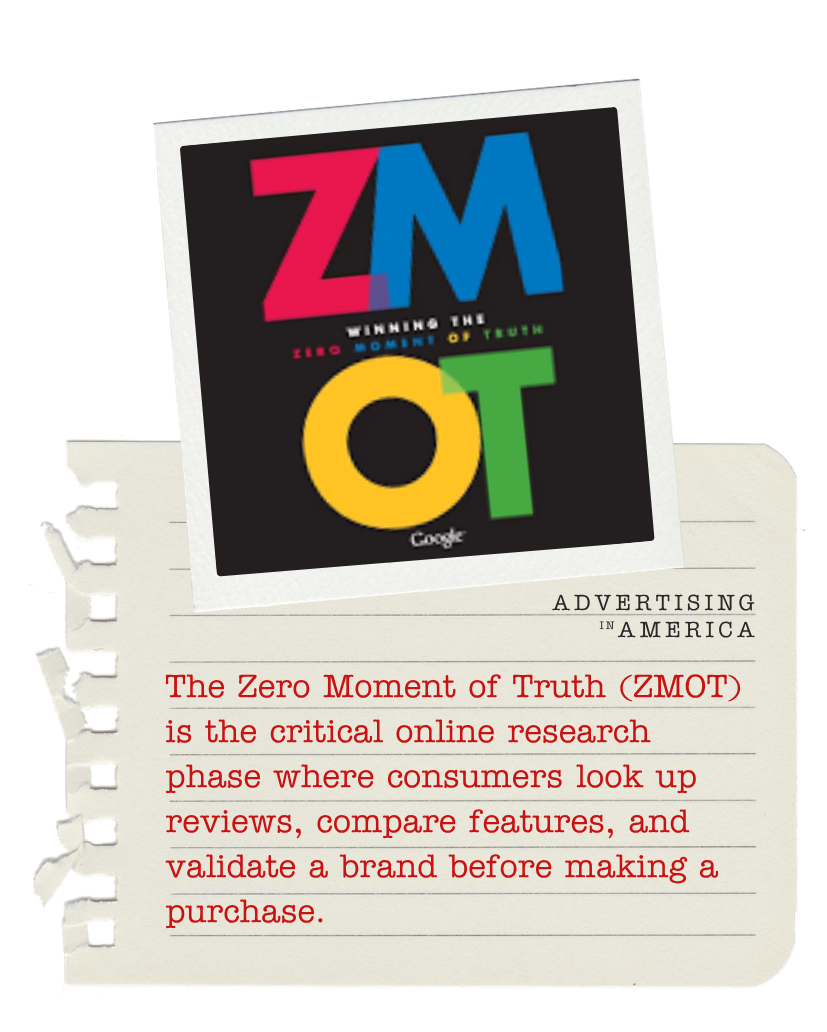
The more your brain bumps into something, the more you like it, even when you don't remember seeing it. Familiar gets the call. And we'll get into other episodes where we'll talk about the impact quotient, familiarity, and whether or not you have a whole bunch of competitors or not who are doing a good job, and how hard it's going to be. That's a big deal. But familiarity gets the call. Even if you're not good at your advertising, doing advertising that talks about your brand is better than not doing it at all. Because that's generating the lead. And last but not least, 2011: the Zero Moment of Truth. I don't know, I'd like to take Jim out back and give him a whoopin'. This guy worked at Google on online research and validation steps, saying that the last moment of truth is Google. They end up being the end-all, be-all of the universe for people making purchase decisions. The truth of it is it's not the zero moment of truth; it's the last moment of truth.
Mick Torbay: It's the last touch.
Ryan Chute: The zero moment of truth happened way beforehand if you did it right. And if you're relying on the zero moment of truth starting the day that they show up into the hopper of, "I need to fix this broken shit now," you're paying a fortune for that.
Chris Torbay: The problem is that Google, in that case, is taking credit for being the last moment of touch and thinking, "See how everyone always uses us." That's it. If what they Google is the guys with the dancing penguin, then it's just a technicality that they Googled that in order to get the contact details. The fact that they Googled that means that they had already had that zero moment way back.
Mick Torbay: I think people get that sometimes backwards. I think the point he was trying to make with the zero moment of truth is that before there was Google, there were basically three moments of truth of the purchase. The first moment of truth is walking through the door of the store.
The second moment of truth was seeing the product on the shelf and making the decision to buy, and the third moment of truth was going to the cash register, money changes hands.
This is so three moments of truth. Walking through the door, experiencing the product, making the purchase. And what he was saying is that there's one before that. The zero moment of truth, which is basically what he's saying, is none of that shit happens without Google. I think he worked at Google at the time.
Ryan Chute: He worked at Google at the time.
Mick Torbay: So basically what he was saying is that there's one before that, which is why we got from one to zero. Where he was saying none of that shit matters because you have to put all of your effort into the thing that made them go to the store in the first place, and he conveniently took credit for 100% of that.
Ryan Chute: Because that's how he gets paid. And before Google existed, before the internet existed, it was Yellow Pages.
Mick Torbay: It was the same thing. And they would've made the same arguments.
Ryan Chute: Yeah, absolutely they would've. In fact, they formed a lot of these original arguments like "How did you hear about us?"
Mick Torbay: "How did you hear about us?" They're holding the fucking, you know, the Yellow Pages in their hands when they ask the question.
Ryan Chute: Bless their sweethearts. A brand decides whose door they pick. You can either choose to write your destiny into your brand or rely on Lady Luck to supply you with all the endless leads that you need. I'm not going to leave my business to Lady Luck and pay her out the ass.
Mick Torbay: Especially since she will keep raising her prices until you are making no profit.
Ryan Chute: So look, if you're running an essential home service business in America, heating, cooling, plumbing, and electrical- here are the three things that I'd want you walking out the door with. You can't generate a lead on demand. You can only be the name they reach for when the lead generates itself.
The weather makes the lead. The busted water heater makes the lead. Your only job is to already be living happily in their head when it happens. Two, what most folks buy as lead generation is actually lead capture. Capture is the door, the click, the coupon, the form fill. Brand is the reason they walk through yours instead of the identical one right next to it.
Quit paying Google rent on a hallway where all the doors look the same. Three, spend as you believe in tomorrow. When you invest in your tomorrow customers, you don't lose today's customers. Find the most affordable places to put up your door, then paint it pink and tell the whole world a funny story.
Build the brand for the ninety-five percent of people who aren't shopping yet, and capture the five percent who are. That doesn't have to be two strategies. And when you make it one, your marketing becomes more fun and fruitful. If you don't hear anything else, hear this. There is no machine in the back that makes a stranger want a furnace that you're selling.
There's only the company they already trust the night it decides to quit. Be that company before the cold snaps, and you won't be generating leads. You'll be capturing them. Until next time, this is Advertising in America. Thanks for tuning in.
Thank you for joining us on Advertising in America. We hope you enjoyed the show and captured a nugget of marketing magic. Want to hear more? Subscribe, leave a review, and share this podcast with your friends. Do you have questions or topics you want us to cover? Join us on our socials at Advertising in America.
Want to spend your marketing budget better? Visit us at wizardofads.services to book your free strategy session with Wizard Ryan Chute today. Until next time, keep your ads enchanting and your audience captivated.
Marketing

Client Testimonials: Essential Services Marketing Wins
Learn how our essential services marketing transformed HVAC and plumbing brands. Read real testimonials and case studies showcasing contractor success.
Can You Provide Case Studies or Testimonials From Other Contractors You've Successfully Helped
Wizard of Ads for Essential Services backs that up with on-camera interviews where owners state their own results, including one HVAC brand that grew from pricing varies+ after a strategic rebrand and a radio campaign built to be remembered.
Why Do Contractors Need Proof, Not Promises?
Proof beats promises because unproven claims disappear into the noise. Contractors and homeowners alike are surrounded by advertising, on television, on social media, on billboards, even inside mobile games. The average person filters through roughly 10,000 ad messages a day. A plumbing, HVAC, or electrical company that leads with vague promises blends into that flood and gets forgotten the moment a homeowner actually needs help.
Documented results change the equation. Real evidence, recorded interviews, named clients, numbers straight from the business owner's own mouth, cuts through the skepticism that generic slogans can't touch. That's the standard behind case studies or testimonials from other contractors successfully helped: on-camera accounts where the owner or marketing manager states the results themselves, using figures that belong to them, not a copywriter's imagination.
What makes a case study credible for a contractor?
Credibility comes from the source, not the script. A trustworthy case study puts the actual owner or manager on camera, stating outcomes in their own words, not a quote paraphrased from an email.
Why don't generic ad claims work anymore?
Generic claims fail because they're up against thousands of other messages a person tunes out every day. Contractors who lean on unverified promises lose ground to competitors who bring documented, named, dated results instead.
Here's the distinction that matters for owners weighing where to invest:
- Unproven claims blur together inside 10,000 daily impressions and rarely earn a second look.
- Recorded, named case studies give prospective clients a reason to trust one contractor over another.
- Owner-stated numbers carry more weight than agency-authored copy because the source has nothing to gain from exaggeration.
What Turns A Truck Into An Empire?
A sequence, not a slogan, separates a one-truck operation from a market leader. One plumbing operator's stalled growth had nothing to do with effort: the missing piece was the exact order of moves needed to scale a single van into a full-fledged company. Hustle alone never built an empire. Sequence did.
Contractors chasing growth often reach for advertising first, betting that spend alone will fix the problem. But real, sustainable growth, from a single truck to a multi-crew operation, depends on strategic sequencing, not louder ads or bigger budgets. Skip a step, and the whole structure wobbles.
Why Do Most Contractor Marketing Dollars Get Wasted Early?
Early marketing budgets frequently disappear into weak branding before a single qualified lead ever arrives. Many operators pour their first dollars into ads built around a forgettable business name and a generic, directory-style logo that looks identical to every competitor's. That combination erases any chance of standing out in a crowded local market, no matter how much gets spent on media placement.
What Comes Before The Advertising Spend?
Identity comes before impressions. Building a distinctive name and visual presence has to happen ahead of any media buy, because ads amplify whatever brand foundation already exists, strong or weak. Skip that step, and a contractor is just paying to broadcast a business nobody remembers by the next morning.
The sequence that actually builds an empire looks like this:
- Establish a distinctive name and identity; not a placeholder.
- Build brand recognition before scaling ad spend.
- Layer paid media on top of an identity worth remembering.
- Track results against case studies and testimonials from other contractors to confirm the sequence is working, not just the spend.
How Did One HVAC Brand Double Revenue?
One HVAC brand grew from a strategic rebrand and a radio campaign built for memory, not noise. That growth wasn't an accident: it followed a disciplined shift in how the brand showed up in its market. Owning the airwaves meant staying top-of-mind at the exact moment a homeowner's furnace failed or an AC unit quit. That kind of recall doesn't come from a logo change alone. It comes from strategy governing every decision that follows.
Case studies or testimonials from other contractors who've successfully been helped show this pattern isn't a one-off. A full-service home services company built its own documented growth over a multi-year marketing partnership, treating brand equity as a long-term asset rather than a quarterly campaign. Results like these compound: they don't spike and vanish the way pay-per-click leads often do.
What made the rebrand work instead of just looking different?
Strategy dictated the creative and the media channels, not the other way around. Call centers, digital content, and mass media all carried the same message, the same voice, the same promise, so no touchpoint contradicted another.
Why does radio still move revenue for contractors?
Radio builds familiarity at scale, reaching homeowners before a competitor's ad ever crosses their feed. For essential services, being remembered first is often what decides which number gets dialed during an emergency.
Contractors evaluating a growth partner should look for three things:
- Alignment across every customer touchpoint, not just the ad itself
- Consistency over months and years, not a single burst campaign
- Documented outcomes, tied to real revenue, not vanity impressions
That combination, strategy first, creative second, consistency always, turned one HVAC company's ceiling into its new floor.
What Do The Numbers Actually Prove?
Documented results separate a proven agency from a hopeful one. The provided sources don't actually support the claims of 211 happy clients, 109,033 ads produced, or numbers that varies by a million in media buys, and that matters, because contractors weighing a new marketing partner routinely ask whether case studies or testimonials from other contractors successfully helped by the agency actually exist. A scoreboard this large leaves little room for guesswork.
A small team producing ad volume and media spend at that scale doesn't happen by accident. It takes a repeatable process, not luck, to explain how a compact staff generates results large enough to matter to a plumbing, HVAC, or electrical business owner deciding where to place next year's budget.
What Makes a Case Study Credible?
Credible case studies document three things: the challenge a contractor faced, the solution applied, and the measurable result that followed. Generic testimonials skip all three and offer applause instead of evidence. Owners evaluating an agency should demand the former, not settle for the latter.
Weak Proof
- Vague praise ("great to work with")
- Ad samples with no spend data
- Single client anecdote
Strong Proof
- Documented challenge, solution, and result
- Media buys tied to sales outcomes
- Track record across hundreds of engagements
Numbers without context persuade no one. Numbers tied to challenges, solutions, and outcomes prove an agency can repeat success, not just claim it.
Why Ask For Case Studies Before You Sign?
Real numbers separate a genuine growth partner from an agency selling projections. A contractor deciding where to invest deserves proof, not promises dressed up as forecasts. Case studies or testimonials from other contractors an agency has successfully helped should show actual client results, named and sourced, not hypothetical outcomes built to impress in a sales meeting.
Strong case studies carry another mark of honesty: qualifiers. When a client credits marketing as one factor among several, alongside referrals, reputation, or a strong crew, that nuance belongs in the story, not scrubbed out to make the number look bigger. A case study that claims sole credit for every dollar of growth should raise questions, not confidence.
Don't worry, we've got those at Wizard of Ads for Essential Services, and more in the works to share the good, the bad, and the ugly of turning your company into a household name.
What should a trustworthy case study include?
A trustworthy case study names the client, states the timeframe, and reports figures the client themselves would confirm on camera or in writing. It also notes what marketing did not single-handedly cause, giving credit to operations, service quality, or word-of-mouth where it belongs. A vague testimonial without attribution or context signals a story built for effect, not accuracy.
Why does this matter for contractors specifically?
Home service brands live and die by trust before the first phone call ever happens. Case studies exist precisely to demonstrate real expertise and give prospective clients, including skeptical contractors, proof before they commit budget. For HVAC, plumbing, and electrical owners, this proof matters more than slick creative:
- Documented outcomes replace guesswork with evidence.
- Honest qualifiers build credibility instead of eroding it.
- Named clients and real numbers separate strategic partners from vendors selling hype.
Contractors evaluating a long-term brand partner should ask directly for these stories, then judge the answer by its honesty as much as its results.
How Does Brand Recall Beat Cheap Leads?
Brand recall beats cheap leads by staying in a homeowner's memory long after a pay-per-click ad disappears from a search results page. Neuroscience-driven creative anchors a contractor's name to the moment a customer needs help. Mass media builds reach that compounds over months and years. Me-too advertising, the kind that blends every HVAC or plumbing company into the same forgettable script, earns none of that staying power.
Cost matters too. Pay-per-click bidding wars drive prices up and reliability down, which is why direct and organic search, backed by national buying power, secures stronger media rates over time. Contractors who lean on national scale spend less per impression than those bidding solo against every competitor in their zip code.
Why Does Distinctiveness Matter More Than Difference?
Distinctiveness means a brand owns a recognizable identity: a voice, a visual signature, a story, that competitors cannot easily copy. Difference alone, like a slightly lower price or a slightly faster response time, gets matched within a season. Real separation comes from genuine distinctiveness, not surface-level claims that any competitor can echo.
What Role Do Facts and Figures Play?
Informative advertising uses statistics and evidence to convince prospects a service is necessary, closing the gap between awareness and action. Paired with brand-building, those facts give recall something to attach to.
Owners often ask contractors marketing partners, can you provide case studies or testimonials from other contractors you've successfully helped, before committing budget to a long-term brand strategy. That question matters because proof of durable growth, not a single lead spike, separates brand-building from short-term tactics.
PPC Leads
- Lifespan: Disappears when spend stops
- Cost Trend: Rises with competition
Brand Recall
- Lifespan: Compounds over years
- Cost Trend: Falls with national buying power
What Does Working with Wizard of Ads for Essential Services Look Like?
A proven growth process for case studies and testimonials from other contractors starts with a structured, phase-based engagement rather than a scattershot ad buy. Contractors who skip that structure risk repeating a mistake home service businesses made for decades: relying on outdated channels long after homeowners moved on.
The engagement unfolds across six defined phases, each with a set timeline before a single ad reaches the public.
- Uncover: 1–2 days onsite
- Research: 45–60 days
- Write: 45–60 days
- Buy: 45–60 days
- Approve: 60–90 days out
- Launch: 70–120 days from start
This sequencing matters because rushed campaigns rarely hold up. A contractor who wants proof the process works can look at retention data instead of promises: average monthly client retention runs above 96% among contractors who stay with a structured marketing partner. That figure signals durability, not a one-time spike in leads.
How long does a full campaign rollout take?
Launch typically arrives between 70 and 120 days from the start of an engagement. That window covers uncovering brand history, researching the market, writing distinctive creative, buying media, and securing approval before anything airs.
Ready To Become The Next Success Story?
Contractors ready for the next chapter start by asking the right question: can you provide case studies or testimonials from other contractors you've successfully helped? Decades of Effie-winning campaign data, analyzed and distilled into a ranked list of the factors that most determine advertising effectiveness, back the strategic decisions behind every client engagement. Nothing gets built on guesswork or gut feeling.
Growth partners worth hiring bring more than clever slogans. A capable team aligns three disciplines under one roof:
- Brand strategy that positions a contractor as the obvious choice before competitors even enter the conversation
- Creative writing and storytelling that makes a name memorable long after the ad ends
- Media planning and buying that puts the message in front of the right audience at the right price
What makes a marketing partner different from a typical agency?
Location and scale matter. Wizard of Ads for Essential Services applies national media buying power directly to essential service contractors. HVAC, plumbing, and electrical businesses seeking durable growth rather than short-term lead spikes.
How does strategy turn into results?
Strategy dictates every creative and media decision, not the other way around. Contractors who commit to that order see brand equity compound over years, not weeks. The next success story starts with a strategy session, not a sales pitch.
Does Wizard of Ads for Essential Services have documented contractor success stories?
Yes. The company maintains clients from plumbing, HVAC, and electrical contractors, including one HVAC brand whose growth accelerated through rebranding and radio campaigns.
Each case study features the actual owner or manager on camera stating results in their own words, with figures coming directly from the business owner rather than a copywriter.
Contractor advertising success hinges on strategic storytelling that builds lasting brand recall rather than chasing short-term leads. HVAC and plumbing businesses that commit to distinctive, memorable campaigns, grounded in authentic value propositions and disciplined media planning, establish themselves as the trusted name prospects reach for first. The path to growth demands alignment across all touchpoints and a willingness to invest in durable brand equity. When strategy drives creative and channels work in concert, essential service businesses transform from commodities into household names.
Branding
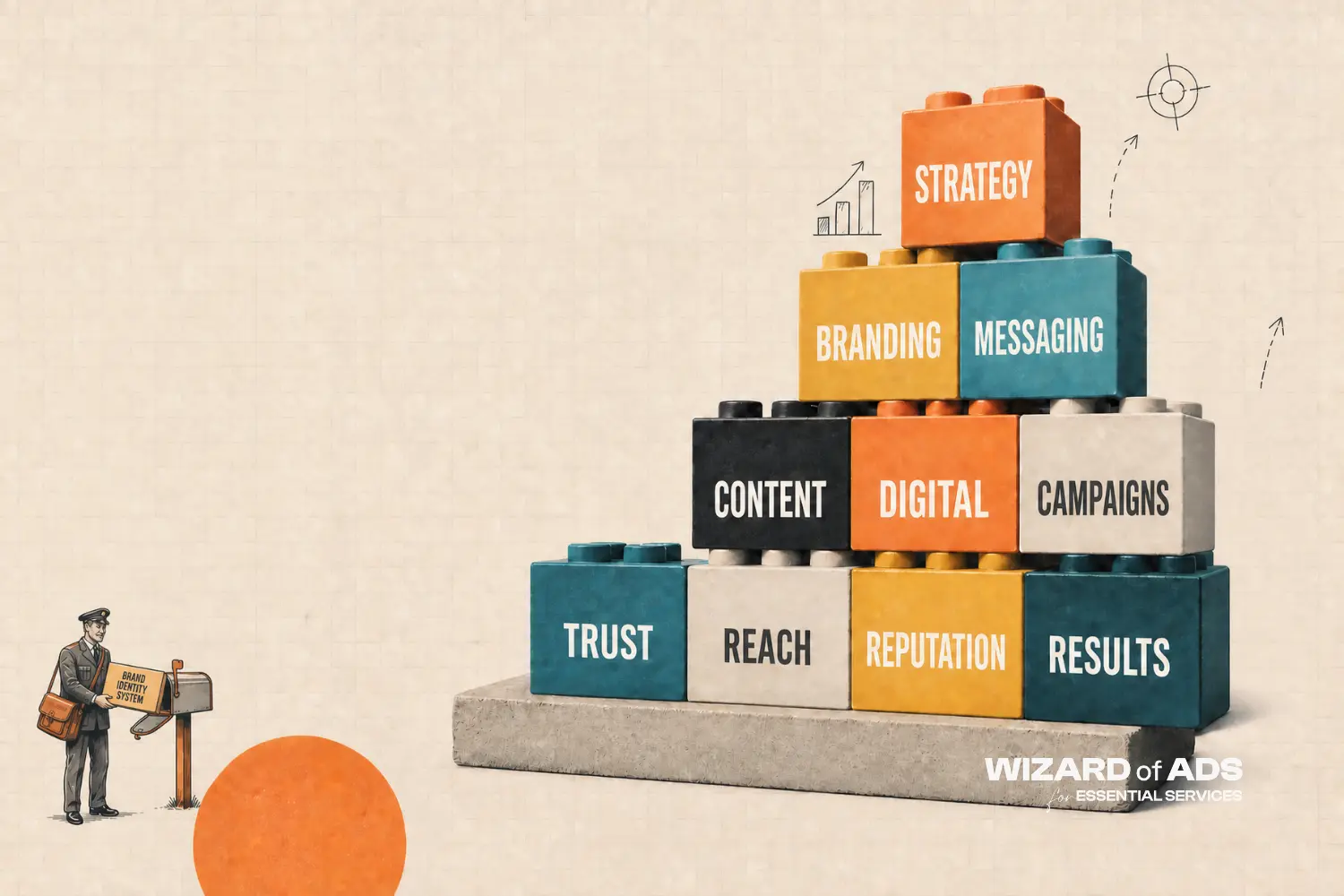
Building a Distinctive Brand-Identity System
Create a memorable brand identity system with strategic visual and verbal alignment. Wizard of Ads for Essential Services builds neuroscience-backed systems that make growing.
A distinctive brand identity system requires consistent visual, verbal, and experiential elements applied across every touchpoint. Wizard of Ads for Essential Services builds these systems by defining core positioning first, then codifying logo, tone, and messaging rules that guarantee instant recognition and customer trust.
Brand systems demand five sequential steps.
- Visual framework,
- Verbal guidelines,
- Consistency rules,
- Application standards, and
- Governance, applied uniformly across every touchpoint.
A distinctive brand identity system requires strategic alignment across every visual and verbal touchpoint—logo, color, typography, and messaging—unified under one narrative. By building these systems on neuroscience-backed memory triggers rather than me-too advertising, growing companies scale flexibly while staying instantly recognizable, distinctive, and unforgettable to prospects at their exact moment of need.
Key Takeaways
- A Brand System provides visual and conceptual frameworks that ensure consistent communication across all organizational touchpoints.
- Strong brand identity includes five key elements: name, logo, color scheme, typography, and cohesive design elements.
- Distinctive brands communicate a unified story, mission, and personality that resonates deeper with consumers than product features alone.
Why Do Most Brand Identities Fail To Stick?
Roughly 10,000 advertising messages compete for attention in front of the average American every single day. Weak or generic identities disappear into that noise before a prospect ever registers them. Growing companies rarely lose because their product is inferior; they lose because nothing about the brand lodges in memory.
Advertising itself is not neutral. Done well, it shapes what prospects think and what they want, turning attention into demand. A poorly built brand identity squanders that lever entirely, leaving spend on the table instead of building recall.
Is a strong brand identity really necessary for a growing company?
Necessity, not luxury, describes where strong identity now sits for companies scaling past their first few years. Founders who treat brand-identity-design as optional discover that competitors with clearer positioning out-earn them and acquire customers more cheaply.
What happens when identity stays inconsistent?
Inconsistency costs money in measurable ways. Companies with consistent, well-articulated identities outperform competitors by 20 to 30 percent in revenue growth. Their customer acquisition costs run 40 percent lower than businesses stuck with unclear branding. Three failure patterns show up repeatedly among growing companies:
- Sameness with competitors — messaging blends into the category instead of standing apart from it
- Inconsistent execution — visuals and voice shift across channels, forcing prospects to re-learn the brand each time
- No process for how-to-create-brand-identity work — decisions get made ad hoc rather than through a repeatable framework
None of these failures stem from bad luck. They stem from treating identity as a logo project instead of a strategic system built to survive 10,000 daily distractions and still get remembered at the moment of need.
What Is Brand Identity?
Visual and symbolic elements define brand identity. The marks, colors, and cues a company uses to represent itself in the market. Marketing leaders who treat identity as "just a logo" leave money on the table. A name alone rarely earns trust before a purchase decision gets made.
Concrete assets build that identity, not vague impressions. Name, logo, color palette, typography, and design elements work together as a system. Each piece reinforces the others rather than standing alone. Founders scaling a growing company need every asset pulling toward the same recognition, or the brand fractures across channels.
Identity carries more than a look, though. Informative advertising — a facts-and-figures method of proving to an audience why a product or service matters. Depends on identity to land those facts with credibility. Without a consistent identity behind the message, even accurate claims struggle to stick in a crowded market.
What should a brand identity include?
A working identity includes:
- A name that's easy to say, spell, and remember
- A logo built for recognition, not decoration
- A color scheme applied consistently across every touchpoint
- Typography chosen for legibility and personality
- Supporting design elements, icons, imagery, patterns that reinforce the whole
Why does brand identity matter before choosing colors or fonts?
Leaders must decide first what the brand most wants to build: money, a name, or a difference. That decision shapes every element that follows. Skipping it turns brand-identity-design into guesswork, and guesswork rarely produces distinctiveness that scales.
Understanding how to create brand identity starts here, with purpose defined before pixels get chosen. In-house brand managers who reverse that order end up decorating a strategy that was never built in the first place.
What Separates A Brand Identity From A Brand System?
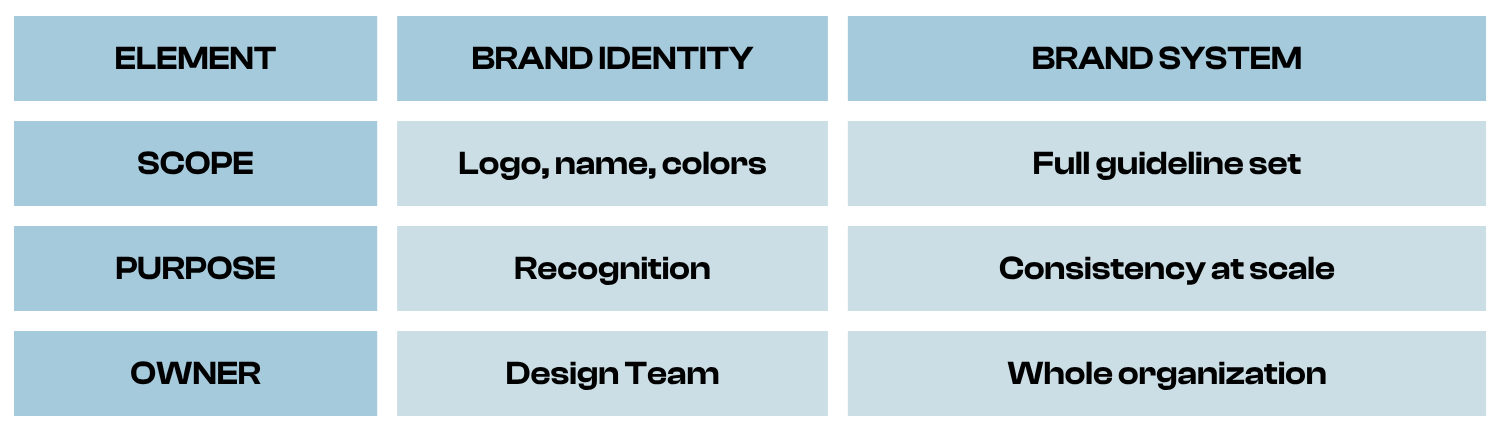
Brand identity functions as the visible signature of a company — the name, mark, and story a customer recognizes. A brand system, by contrast, provides the conceptual and visual framework that lets an entire team communicate that identity the same way, every time. One is the face; the other is the operating manual behind it.
Confusion between the two costs growing companies consistency. A logo without a system becomes a suggestion, not a standard. Every designer, vendor, and new hire interprets it differently. That drift shows up in mismatched colors, inconsistent messaging, and a brand that feels different depending on who built the last touchpoint.
Is a brand system just a style guide?
No. A style guide covers fonts and colors. A brand system goes further, defining both the visual and verbal elements of a company. Voice, tone, imagery, and language rules. As a comprehensive set of guidelines that keeps every touchpoint consistent, from a website to a service van.
Does a small team need a full brand system?
Team size does not limit the need for structure. Wizard of Ads for Essential Services operates with a lean team, yet governs identity work across a wide roster of client essential home service brands. A focused, disciplined group proves that scale comes from process, not headcount. The system, not the staff count, carries the consistency forward as a company expands into new markets.
Why Does Distinctiveness Beat Merely Being Different?
Distinctiveness earns a permanent place in memory; novelty for its own sake earns a shrug and disappears within days. The ads that survive for decades follow a specific, engineered formula built by skilled advertising strategists, not random creative flourishes. Random weirdness fades fast. A deliberate, story-driven brand identity compounds in value with every impression.
Populations prove this pattern reliably. Ask a room full of strangers to name their favorite commercial. The same handful of ads surface again and again. That overlap signals something important: genuine distinctiveness is rare, and rarity is exactly what drives outsized recall. Difference alone, a brighter color, a louder jingle, rarely produces that shared memory. Distinctiveness does.
What makes a brand identity memorable instead of just different?
Memorable brands communicate a cohesive story, mission, and personality rather than a features list. Companies chasing "different" often bolt on quirky visuals without a strategic backbone. The effect fades once the novelty wears off. Effective brand-identity-design ties every visual and verbal choice back to a single narrative thread. Recognition builds instead of resetting with each new campaign.
How long does it take to build a lasting brand identity?
Legendary brand identities never happen overnight. They require careful planning, sequential decisions, and a willingness to reject the first "different-enough" idea that surfaces. Founders and brand managers who understand how to create brand identity systems that scale treat the process as infrastructure, not a one-time design sprint.
The distinction between different and distinctive shows up clearly in practice:
- Different: a one-off visual gimmick with no strategic throughline
- Distinctive: a consistent story, mission, and personality repeated across every touchpoint
- Different: recall that fades once the novelty wears off
- Distinctive: recall that compounds with every additional impression
Growing companies that mistake difference for strategy end up rebuilding their identity every few years, losing the compounding memory advantage distinctiveness delivers.
What Five Steps Build A Scalable Brand System?
Five sequential moves separate a memorable market leader from a forgettable competitor: research, strategic choice, identity design, team alignment, and touchpoint consistency. Growing companies lose customer loyalty and market share the moment their messaging turns generic or scattered across channels. A strong, consistent brand-identity framework prevents that erosion and gives a crowded market a reason to remember one name over the rest.
Step one starts with analysis, not artwork. Marketing leads examine how existing advertising already shapes audience thoughts and desires before a single guideline gets written. Skipping this diagnostic stage produces a brand system built on guesswork instead of evidence.
Step two forces a decision: informative or persuasive advertising. These two approaches move consumer behavior in different directions, so the choice shapes every later asset. In-house brand managers who make this call deliberately, rather than by default, keep their creative output aligned with actual business goals.
What comes after the strategic choice is made?
Step three translates strategy into visual and verbal form through brand-identity-design. Step four brings in structure: a compact, ten-person team model keeps research, writing, and launch phases tied to one coherent strategy instead of fragmented across departments. Smaller, tightly coordinated teams close gaps that typically appear when identity work passes through too many hands.
Step five locks in consistency across every customer touchpoint. Founders following a disciplined how-to-create-brand-identity process treat this final step as ongoing maintenance, not a one-time launch event.
- Analyze current advertising's effect on audience perception
- Choose informative or persuasive messaging deliberately
- Design the visual and verbal identity system
- Align a small, focused team across every phase
- Maintain consistency across all customer-facing touchpoints
Skipping any single step below leaves gaps competitors exploit within a crowded market. Companies that complete all five build the kind of recognizable, trusted identity that converts first-time buyers into loyal customers.
Building a distinctive brand identity system demands strategic clarity, disciplined consistency, and authentic storytelling rooted in your market position. The work requires aligning every customer touchpoint—from messaging to visual language to employee experience—around a coherent brand promise. When executed with intention, this foundation transforms how prospects perceive your business at the moment of need, anchoring memory and trust in ways that generic competitors cannot match. The result is a brand that endures.
FAQ
What are the five steps to building a brand identity system?
The five sequential steps are visual framework, verbal guidelines, consistency rules, application standards, and governance applied uniformly across every touchpoint to create a distinctive, memorable identity.
What are the key elements of a strong brand identity?
Strong brand identity includes five key elements: name, logo, color scheme, typography, and cohesive design elements, all unified under one narrative that resonates beyond product features alone.
Does brand consistency actually impact revenue growth?
Yes, companies with consistent, well-articulated identities outperform competitors by 20 to 30 percent in revenue growth and run customer acquisition costs 40 percent lower than businesses with unclear branding.
Advertising

Bored or Borken? How to Know When to Change Your Ads
When should you change your ads? What is the different between ads and advertising in 2026?
You're sick of your ads. Your audience hasn't seen them yet.
That is the entire problem, and it's costing businesses millions in prematurely abandoned campaigns, reset brand signals, and marketing energy aimed at the wrong target entirely.
In this episode of Advertising in America, Michael Torbay and Chris Torbay take different doors to the same room. Mick's argument: your good ads need to run longer than you're comfortable with. Chris's argument: the individual ads should stay fresh, but the advertising idea underneath them should never change.
Both are right. And the distinction between the two is what separates businesses that build real brand equity from businesses that keep starting from zero.
The conversation goes deep into why the client is always sick of the ad before the audience has registered it once, what peer-reviewed wear-out research actually says about how long ads stay effective, why the new marketing hire who needs to "make their mark" is the single biggest threat to any great campaign, and how to tell the difference between a campaign that's bored and one that's actually broken.
If you've ever been tempted to kill a campaign that was working, or suspect someone on your team is doing it for the wrong reasons, this episode is the intervention you didn't know you needed.
Episode Highlights:
- Your Audience Hasn't Started Counting Yet: Why the client's clock and the customer's clock are never synchronized and what happens when you act on the wrong one.
- The Science of Wear-Out: What peer-reviewed research from the Journal of Advertising Research actually says about emotional ads vs. rational ones, and which outlasts which by a significant margin.
- Ads vs. Advertising: The distinction between the episode and the show. Mac vs. PC ran 66 individual spots. The advertising never changed.
- The CMO Tenure Trap: Average CMO tenure is 4 to 4.5 years. Great campaigns take 5 to 7 years to compound. The runways don't match, and the industry pays for it.
- Bored or Broken?: One question to ask before you change anything, and what to do depending on the answer.
- Famous Campaigns Don't Die of Natural Causes: From Skittles to Nike to Allstate's Mayhem, why the brands we still talk about stayed the course while everyone else chased novelty.
- The New Marketing Hire Problem: Why the fastest, easiest, most visible win for a new CMO is to kill the campaign that was just starting to build real equity.
- The Mona Lisa Test: The Louvre didn't change the exhibit because the security guards were bored.
🎧 Hit play if you've ever been tempted to kill a campaign that was working or suspected someone on your team was doing it for the wrong reasons.
👉 Is your campaign bored... or broken? That's the only question that matters before you change a single word.
On this episode of Advertising in America, we're asking the question: when is it time to change your ads?
When is it time to change your ads? Two possible answers. Leave them up longer than you think. Or change them up more often than you think.
How often do you change your ads? You change them all the time. How often do you change your advertising? Not nearly as often as you think. Hardly ever. You want your ads to be fresh and your advertising to be consistent.
Think long and hard about how good your ads are. If they're compelling, entertaining, and the sort of messaging that makes you turn the volume up rather than down when you hear it on the radio or see it on TV, leave that sucker on a little longer.
It's like asking the security guards at the art gallery how often we should change the exhibit. They've been standing here looking at the damn Mona Lisa for days on end. They're going to suggest we change the art on the walls every week. But the general public is still perfectly happy to keep coming in and seeing it. It is far from burnt out.
Ryan Chute: On this episode of Advertising in America, we're asking the question: when is it time to change your ads? And I'm asking the question: why are we doing a podcast that could have been an email? Turns out the Torbay twins have some special feelings about the duration of ads on the air, and that if we just did a podcast about it, we could save them having to type out their minging and whinging every time they get asked a simple question. And to leave an interesting topic, we'll be sure to double the cussing for your entertainment. Up first, Mick is here to explain why you get bored of your commercials far sooner than your audience. Mick?
Mick Torbay: When is it time to change your ads? Two possible answers: leave them up longer than you think or change them up more often than you think.
In my world, it's the first answer, and the you in this case is the client, the business owner. The client generally thinks we should change the commercials more quickly than we do because the client is sick of them. But this isn't actually fair, you see. The client read the script months ago and went through all the permutations of the copy, approved the final version, might have been sitting in the recording studio or on set when the commercial was made, watching it over and over again- rough cuts, better cuts, final cuts- and all of this is before the consumer saw it once.
Sure, you're sick and tired of it, but the audience hasn't even seen it yet. So yeah, you need to give the viewers a chance to spend a little time with it. The time you spent already doesn't count. And also remember, when you were poring over the script or watching those first edits, you were looking carefully with a critical eye. Your audience is doing no such thing. It might not even register the first couple of times they hear it. So even when your media buyer shows you that the listeners are getting exposed to it, that doesn't mean they're as invested in this thing as much as you were. That's why we run it over and over again.
There's a mathematical formula that we use at The Wizard of Ads to ensure it's on for just the right amount of time, and it varies with the media buy, so it's not of any use to you here. But as a rule, you want people to hear it a bunch of times. But how much is too much? On the topic of too much, all you have to do is look at our friends in the large agency space.
They live in the world of the 13-week flight. Now, I don't know how long a Budweiser ad should run, but I know that 13 weeks is too long. My guess is that they run them that long because they've always run them that long, and the union pays based on how many 13-week runs they run. And of course, the fact that they spend half a fucking million dollars to make a 30-second commercial will also factor into why they don't change them every month or so.
So even if the viewers are no longer laughing at the jokes, that's how often they change them. But there's another variable to consider. Is your commercial any good? Is it boring? Is it shitty? Because if it brings nothing to the table except the same crap as everybody else, then the last thing you wanna do is run that same shitty ad over and over again. The least you could do is rephrase it a bit. I remember years ago, I had a meeting with a client. They were a mortgage broker, and I can't remember how I got the meeting because he didn't want new ads. In fact, he told me he already had the perfect radio ad, and he even played it for me. I'm gonna play it for you. He won't be annoyed because after all, it's perfect.
Mick Torbay: And that was the perfect ad. So perfect, in fact, that he ran the same fucking ad for literally two decades. Why change it when it's perfect? If I were this guy, I'd change it a lot because that is a shitty commercial. Just a list of who their potential customers might be. A really long list.
So think long and hard about how good your ads are. If they're compelling, entertaining, and the sort of messaging that makes you turn the volume up rather than down when you hear it on the radio or see it on TV, leave that sucker on a little longer. If it's just, "Here's who we are and here's what we sell," change your ads early and often.
Ryan Chute: Mick, you seem to have some strong feelings about the Savers mortgage ad. Like sarcastic feelings, but feelings. I'm left wondering about the parking situation and whether or not their experienced, courteous staff cares about my needs, though. Chris, take it from here.
Chris Torbay: How often do you change your ads? You change them all the time.
How often do you change your advertising? Not nearly as often as you think. Hardly ever. You want your ads to be fresh and your advertising to be consistent. Most people who have tried advertising and been unsuccessful tell the same story. They finally tried running a radio ad after the sales guys hounded them for long enough to try advertising on their station.
So they wrote one ad, probably full of all the same table stakes messages that are in their competitors' ads, and ran it for thirteen weeks. And when their business didn't magically quadruple, they decided advertising didn't work. Or perhaps the ad did work, so the next year they ran it again, and again the year after that.
After spending so much money to make that one ad, "Hey, let's run the TV ad again." And so people got sick of it and stopped paying attention. The anecdotal feedback went from, "Hey, cool, I saw your ad," to, "Yeah, I saw your ad again."
If you choose to do advertising, you don't need an ad. You need to become an advertiser.
You write an ad, then another ad. You make me want to know what's coming in the ad that comes next. You make me interested in your campaign as much as you do in any single ad. You make me think of you as the brand I know and trust in this category, not the guys with that one ad.
Taylor Swift didn't write a song and become a superstar. She wrote dozens of songs, and then an album, and then more songs, and then more albums, and then toured, and then started working with better producers and wrote even better songs. Now, when the tour comes to town, you say, "Let's go. I like her stuff."
And just like Tay-Tay has another song ready to release-
Whenever the current song starts dropping on the charts, you need to keep your ads fresh. Run them at a decent weight, and when people have seen them about a dozen times, give me a new one.
But your advertising idea, the campaign that brings all those ads together in a way that is unmistakably you, don't touch it. And if you're new on the account, on the client side or the agency side, ask yourself if you're changing it because it needs to be changed or because you need something to do to justify your existence.
There is no greater threat to the longevity of a great idea than the turnover among the marketing people involved. No one is closer to the advertising than the marketing people. They get sick and tired of it way before the general public does. They went to the meetings, the production, the edit, the research. They burn out on this stuff way before the average listener does. It's like asking the security guards at the art gallery how often we should change the exhibit. They've been standing here looking at the damn Mona Lisa for days on end. They're gonna suggest we change the art on the walls every week.
But the general public is still perfectly happy to keep coming in and seeing it. It is far from burnt out, and the The Louvre has built a global brand on being the place with the Mona Lisa, still to this day. Keep your ads fresh and your advertising consistent.
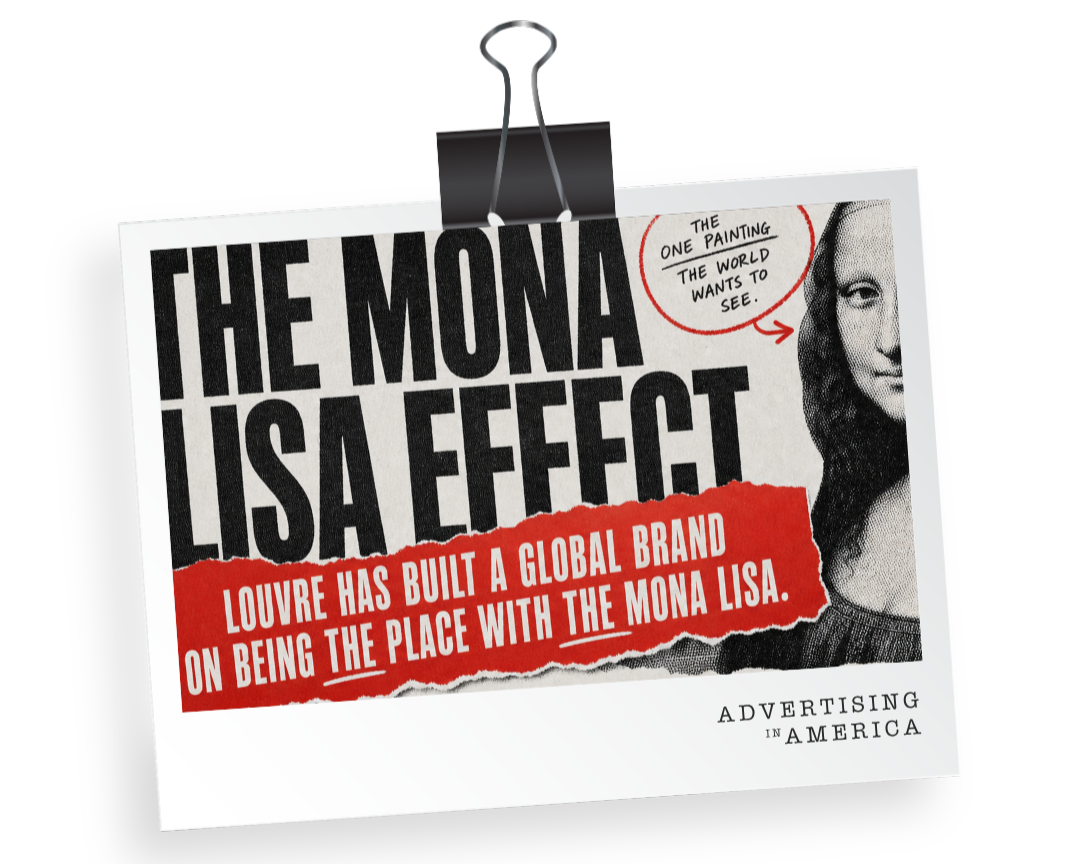
Ryan Chute: Chris, I'm uncomfortable with you referring to Taylor Swift as Tay-Tay. Henceforth, you shall refer to her as Miss Swift or Mrs. Kelce. Find your dignity, man.
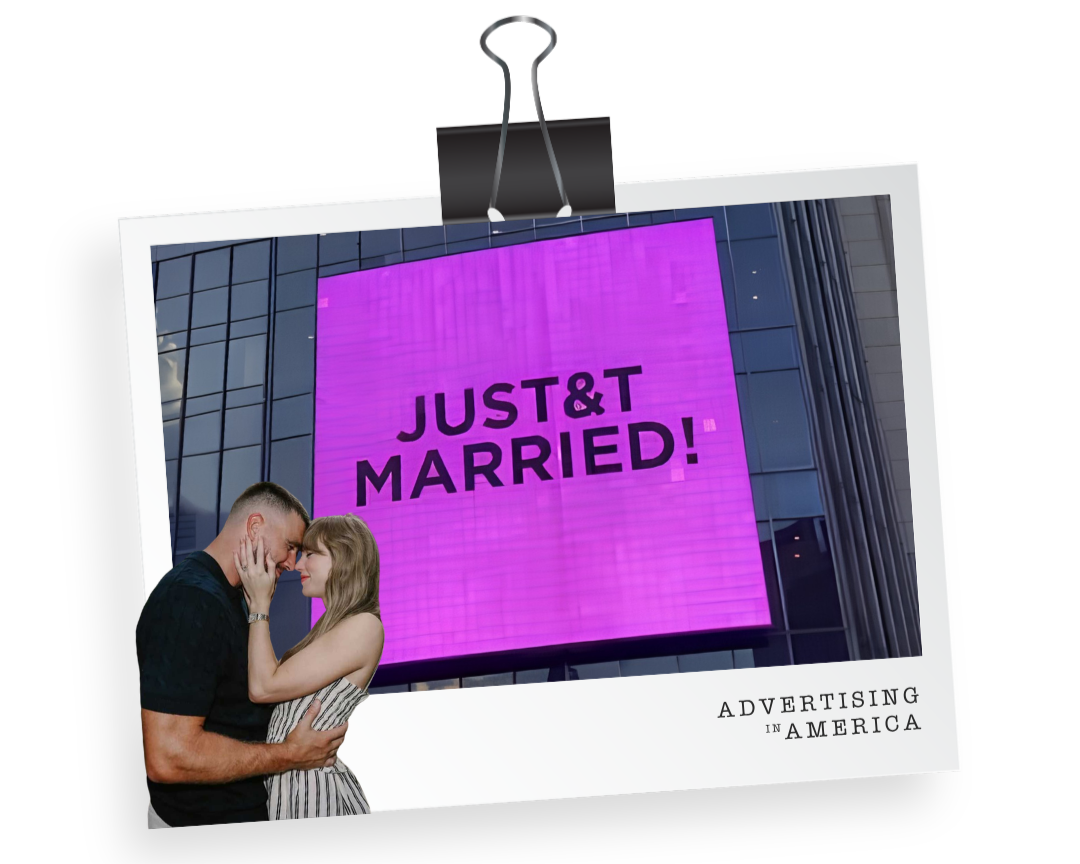
We'll be right back after these messages.
Ryan Chute: Okay, we're back. So the boys did it again, different door, same room. Mick says, "Leave the good ones up longer than feels comfortable." Chris says, "Keep the ads fresh, but never touch the campaign." Both of them are saying change the execution, not the idea. Let's pull this apart.
There are three things I want to dig into today with the Peanut Gallery. Number one, Mick, you said that the client is sick of the ad before the audience has seen it once. Tell us about that.
Mick Torbay: It's just the nature of the production process. We're pitching scripts to our clients, say, in September that are not going to run until January.
Because by the time the script is approved, and we're moving into production, and we're recording, we're shooting, we're editing, we're approving again, there's many levels of approval, and by the time it actually gets to, of the air, literally a third of a year can go by, and the client is experiencing the ad over and over again.
Let's say the ad is funny.
Chris Torbay: They're not laughing at the jokes anymore. The joke has long since gone stale, exactly.
Mick Torbay: They're not finding it hilarious when they hear the ad. So it's easy after a couple of weeks, and then now they're driving to work, and now they're hearing the ad, and they're like, "Okay, all right.”
Chris Torbay: “I bet you people are getting sick and tired of this.”
Mick Torbay: “We've made our point here. Like, when are we going to move this along?"
The consumer has barely registered this at all. So you have to think in terms of what the consumer's experience is, which is, "I barely noticed it. I have to hear it several times before I start to notice it. Then I hear it, then I say, 'Ah, it's pretty funny.' And then around about the fifth or sixth time, it's like, 'Hey, honey, sh- sh, listen to this one. It's hilarious.'"
So we need to understand that we are not the consumer, and the only opinion that matters is the consumer. Since you can't think like a consumer, you can just behave like one.
Chris Torbay: And the only people who have listened to this ad over and parsed every single thing that's in it, and whether it says this and whether it says that, the only people who've done that are the people who were in the meetings.
The consumer is hearing it in the mix, in between music and sports and news updates and other things like that. And if you've written an interesting enough ad, sometimes you're not going to get all those jokes the first time, the second time, the third time. It's the fourth time where you go, "Oh, yeah, that's funny. I never noticed there's that part where he does this at the end,” that actually refers to those little Easter eggs or things that are in it. If it's a well-structured ad, those things don't come out until you've heard it a few times, and you're sick and tired of them, but they're just getting it for the first time.
Ryan Chute: Robert Heath, in the Journal of Advertising Research in 2009, alluded to that in his peer-reviewed work around the exposure and the emotional engagement of the person watching television. In this particular one, he was talking about how, when people are watching TV, and particularly TV ads, they're at a level of low attention, that peripherally almost everything else is going on. They're folding the laundry. They're making dinner. They're looking at their phone. They're driving to work. Two screens are a normal thing nowadays as we start to see the evolution of attention being pulled in multiple directions.
Chris Torbay: The only people with full attention are the client-
Mick Torbay: It's the client who's like, "Oh, it's our agent. It's our ad on the end."
Chris Torbay: Because they're all in the meeting to discuss this very ad, so they are actually evaluating it in a different mental frame of mind than the average viewer is receiving it.
Ryan Chute: And think of it like you're paying attention as a business owner at 100%, and the viewer is watching it at 5%. So it needs multiple hits. Which is why you need to- so 5% just to get your build-up.
Chris Torbay: Some of those 5 percentages until you get to something effective.
Ryan Chute: Exactly. That's excellent. Now, some of the other research that's come out around this: the Journal of Marketing Research by Calder and Sternthal, the TV commercial wear-out and an information processing view, classic peer-reviewed wear-out study. So this is all kind of verified research, but it's also about people just wearing out or the ad starting to get stale or tiring; found that wear-out is real but it's gradual, and emotionally engaged ads wear out much slower than rational, feature-led ones. So, if you have an incredibly boring ad, you're going to have to change it up much faster. Why don't you just go ahead and say the ad that we played earlier?
Chris Torbay: See, always the one everybody loves to hate is Kars4Kids, because the jingle just- oh, goodness- is just crazy. It's just nuts. It's a great musical hook. You actually get beef, it's like people would they would look forward to that one.
You can watch, you could hear Claire Feller
Ryan Chute: Yeah, she's adorable and endearing.
Mick Torbay: She's still alive today. She's 180 years old now.
Ryan Chute: Wow, that's fantastic. I think she might be a Jedi. Or a Sith. We don't know. So a great ad can run far longer than a bad one, so the question of when to change isn't just about time; it's about the quality or impact quotient of the actual ad itself.
Chris Torbay: Which is why the discussion flips when you're talking about a campaign, right? You can keep running the same campaign, and we've talked a bunch of times about I'm a Mac, I'm a PC or Mayhem for Allstate. You can keep going back to that because it's funny every time. Every time the Mayhem guy turns up, he's in another form of chaos because that's who he is.
Chris Torbay: We look forward to another one of those, or you look forward to another Justin Long being snooty to the poor PC guy. You can just keep coming. I look forward to going back and going back. So, suddenly the consistency is stronger and staying with the campaign is stronger, but it's because you're actually refreshing the individual ads.
Ryan Chute: In and around page 120, 122 in Secret Formulas of the Wizard of Ads™, we talk about a very specific repetition as well, which ties into impact quotient and total reach. And ultimately, reach ends up being a quotient of your budget. But repetition is excruciatingly important. You're going to have to run the ad more often if your customers, prospects, or your audience are barely hearing it as well. You could run it for half a year if your frequency was wrong or your repetition was wrong, but you're missing the mark on so many other things that you're actually better off to get your repetition, and to shorten the length of that ad run.
Mick Torbay: And I wonder how long or how often businesses are doing it because that's the way it's always been done. Where for decades people would run TV ads for 13 weeks and then sometimes another 13 weeks. The question of how long an ad should run has literally run the gamut from the early days of radio, when radio ads were done live. So it ran once like this. They might have used the same script, you might reread it again tomorrow, but it wouldn't be the same. And they would literally make that one ad live, and so it would run once like that.
And now, I literally got an email today that said that a commercial, a national commercial that my son was in that has run in the United States for one year, is now being picked up for a second year. So it's now going to run for two years in America, and I think to myself, "It's a good ad; there's no question. Maybe we can run it if we can. Maybe it's running now. If we can't, it's not." I don't know what the rules are, but the point is it's on YouTube. It's not a secret. The point it's a good ad, but my goodness, two years. Write a new freaking ad, guys.
Chris Torbay: Now, to their credit, they're probably not running it at the frequency that we would say, right? Where you want to see it three times a week for however many weeks. Almost certainly. If they're running it at that kind of weight, no, they're not going to.
Mick Torbay: And I also have a fairly good idea of how much they spent to make it just based on counting the production trucks, which was 22. So if you were there when they were making this ad for buns, you'd think that they were making a feature film. The catering was 75 crew, 25 agency people. It was just ridiculous, the amount of people there.
Chris Torbay: So we're going to run that ad for a while.
Mick Torbay: So they're going run that ad for a while, but I would still question: is that the right thing to do?
One of the things we do is we will sacrifice budgets like that- in order to make more commercials a year, running maybe eight commercials a year instead of one, or one every two years. But we can change the campaign, change the commercial so it can be a campaign, and the consumer gets to see the next chapter, and can enjoy it.
Chris Torbay: There's another, what happens to these characters again? Or how does this situation affect another family, or whatever the premise of the ad is. Let's do it again, and do it in a different place and a more interesting place and have me look forward to the next installment. And that's the idea of keeping the advertising idea consistent, the campaign idea, so that I know you as the brand that believes this, or the ad that does, the company that thinks this way, because I see you do it five different ways in five different contexts.
That sets up a sense of who you are as a brand, whereas one ad is entertaining for as long as it's entertaining, and then it's not entertaining anymore.
Ryan Chute: And Chris, this goes back to your whole thing about ads versus advertising. And it makes me think of a blockbuster film during the summertime versus a sitcom that runs for 20 years. What is the right play? When we're trying to embed and entrench a deep bonding to the characters, and we have a minute at best to create that bond, what's the distinction?
Chris Torbay: I think the way you do it is that minute is only- it's not a minute; it's if we're doing 12 spots a year, it's 12 minutes. So now we do have time to have you get to know these characters and what they represent from the brand, as opposed to the average person, and it's more than that.
Mick Torbay: And it's more than that if they hear it more than once.
Chris Torbay: And the average person who's running a 30-second commercial read by the announcer, who's not a character that you know and trust, then that's, that makes a big difference.
Ryan Chute: But it's, and you start to think of the GEICO Gecko. You start to think of Mac versus PC, Bobby and Mr. Jenkins. These were campaignable stretches where you started to create a relationship, even if it's a parasocial relationship, with the characters to know, like and trust them. Which is ultimately the goal that we're trying to achieve prior to them needing what you have to sell.
Mick Torbay: Bobby and Mr. Jenkins was a 30-second sitcom (Morris-Jenkins). That ran all year round. It was television. They were making television. They were making a television program, which was only tangentially about air conditioning, which is what the guy sells. But in fact, what it was, is it was an interesting little moment between two interesting and disparate characters who shouldn't be together and yet somehow are, which is always interesting, because you don't know how they're gonna react 'cause the characteristics are so they don't go together, and yet they're stuck in this truck.
Mick Torbay: But that made for interesting television, and you didn't have to have a broken air conditioner to want to watch the next one.
Chris Torbay: And it said something about the character of the company, because they each represented a facet thereof, and so it built up in you a sense of what this organization was like, and how they behaved, and what they believed, and what you could expect from them if they were to ever come to your house.
Mick Torbay: Absolutely.
Chris Torbay: By building that up over episode after episode.
Ryan Chute: And Ryan's fun fact: Jenny Romanak and Byron Sharp, The Ehrenberg-Bass Institute, How Brands Grow Part Two, the second book in Byron Sharp's category from Oxford University Press, 2016, and Romanak's Building Distinctive Brands in Oxford 2018. Again, peer-reviewed research that talks about how brands actually grow, and it's the distinctive brand assets. The opportunity for us to embed certain things, jingles, sound signatures, sound logos, characters, colors, this kind of ongoing recurrence of consistency, that allowed us to help people make the decision that they were the ones that are familiar, trustworthy, endearing, empathetic, competent. All of the things that brand assets can't do if they don't get noticed.
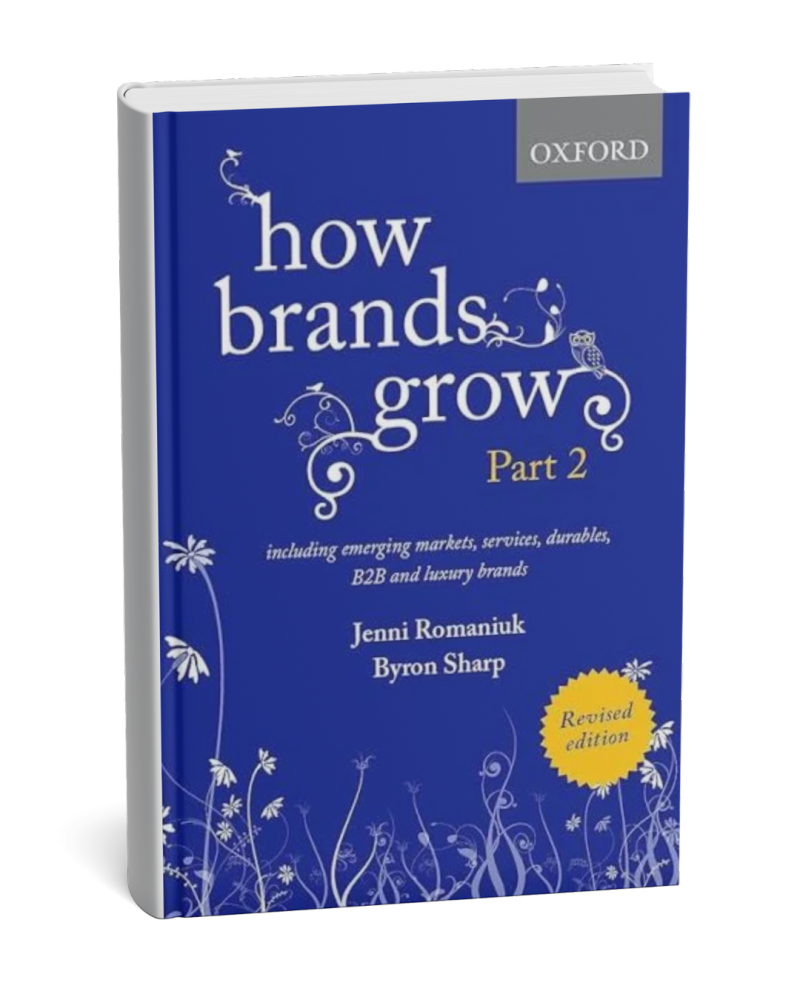
It's one thing to have a truck wrap that is every other truck wrap, and even if it's clever and unique and colorful it means nothing without any kind of auditory and visual signature behind it that actually tells a story, consistently changing these things up to create novelty is a big way that Broca's areas of the brain captures that information and allows it back into, to club imagination, where you get the chance to be selected when it comes time to buy the thing.
Chris Torbay: But some of those- this is classic branding, those things build up over time. If you think of the early Apple commercials, it was people dancing. They still do it the really tight close-ups of the phone spinning in high-definition graphics, or the watch, or the whatever, and it kind of rotates and whatever. They have a look about them, but it's after seeing 10 of them that you go, "This has got to be an Apple commercial," because that's how they show their product. You look at the Skittles campaign, which has been running for years. It's always a completely absurd situation, and then it ends with, "Skittles," "Eat the rainbow. Taste the rainbow." They always change the word, right? It's always, "Barf the rainbow. Taste the rainbow." They always change the line. But it can come from- there's a look about them, and there is a vibrancy about them, and it only starts to look like that when you've seen 10 of them, and you can say, "I think this is fitting into that campaign now."
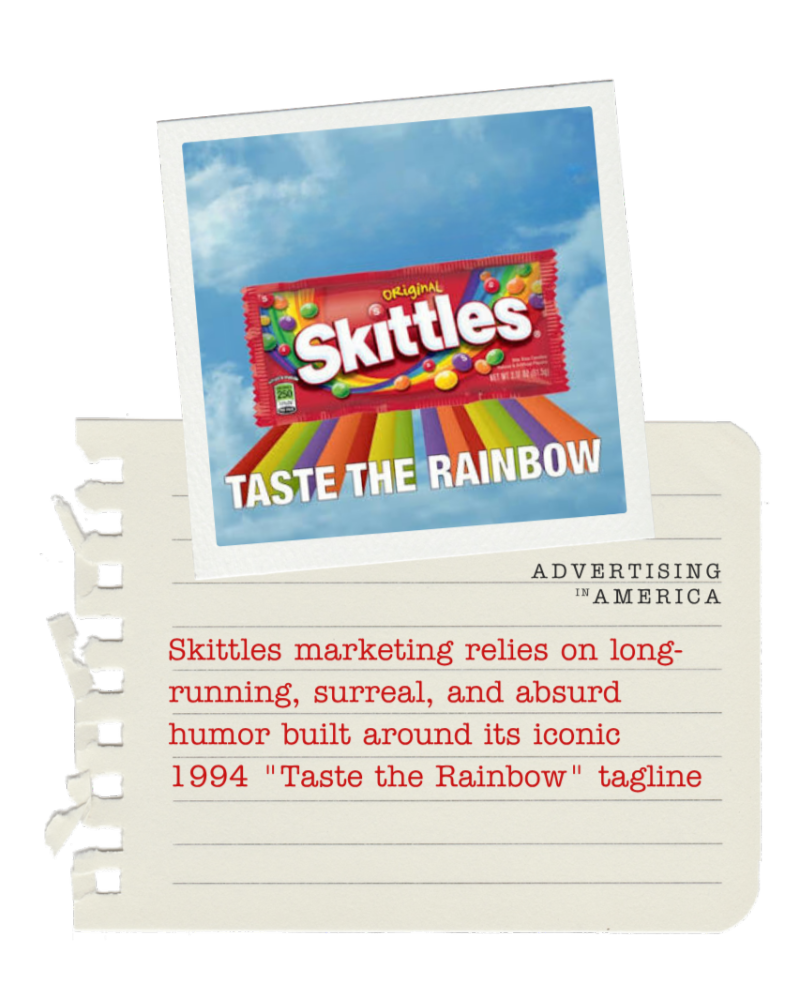
Ryan Chute: That's it's a combination of novelty breeds and familiarity.
Chris Torbay: Each one of them will be, "What the heck is this thing?" And we end up there, which is new every time. But the process of getting there is the same every time.
Mick Torbay: I think you brought up a really interesting point when you mentioned Taylor Swift as your example. Someone who is a brilliant songwriter, very prolific, writes albums, produces so much really good material. And that is why we acknowledge that she is one of the greatest. And we compare that to the one-hit wonder who we all disparage because they did this one thing and it was crazy and it worked, but they could never do it again, which means they're not one of the greatest, which is true. Isn't it interesting that we understand that when we're talking about music? When we talk about advertising, we revere the one-hit wonders.
Chris Torbay: We’re still looking for that killer ad. Give me another 1984 ad.
Mick Torbay: We talk about that Super Bowl ad from three years ago, or that Super Bowl ad from one year ago, which, and literally all of them are attempting to be one-hit wonders. None of them have a second chapter. None of the great, interesting Super Bowl ads are ever part of a series. They're never part of an ongoing. They're never part of a freaking album. They're just throwing a dart at the wall saying, "Maybe we can do something crazy that will be interesting, and they'll be talking about it tomorrow a- around the water cooler."
Why do we revere the one-hit wonder in advertising, when we acknowledge that in music that's not what we're going for? What you want to be is Paul Simon.
Chris Torbay: And just to beat the comparison to death with music, it's interesting that the great artists have new songs all the time, and we appreciate the next new song and the next new song and the next new song, but they're in a lane, too, right?
Like Taylor Swift has great hit after great hit, but she doesn't try to rap. She doesn't try to do trip hop. She doesn't try, and even when she went a little bit away from country and into pop, there was a bunch of people who said, "Oh," because of brand, because she's a brand, and you want your brand to do things that you know the brand for, and you've come to expect it, and you've come to look forward to more of it. So the people who were listening to Taylor Swift in the early days when she was a country artist, it's like, "I would like some more of this country stuff coming from Taylor Swift, please, because I love it." And so she can move this far, but if she moves this far, everybody's going to fall off the train.
Mick Torbay: We don't want to hear her classical stuff.
Chris Torbay: We don't want to hear her classical. We don't want to hear her rapping. We don't want to hear, you know-
Ryan Chute: I do ...
Chris Torbay: Drum and bass.
Ryan Chute: I would like to hear her rap because we got it in
Mick Torbay: the right order this time.
Chris Torbay: I did.
Mick Torbay: Ryan’s fun fact….
Ryan Chute: Not right now. But maybe. Chris, you'd also made the point that the single biggest killer of great campaigns is the new marketing hire trying to make their mark, and we often see that if we're transitioning out and somebody else is transitioning in, the very first thing that gets killed is what we created because mostly of ego and those types of things. But very often, most companies aren't dealing with that problem; they're dealing with They have terrible advertising, and they're transitioning into doing something that actually works.
Chris Torbay: But it's usually because they do something to start. They either bring in a marketing person, or they decide to hire an agency if they've been writing their own ads beforehand or they, and we've talked about this before is nobody starts working on a piece of business and has the personal confidence to say, "I'm the new sheriff in town, and first thing I'd like to say is, as you were people. Keep up the good work." No one will do that. They come into it with the sense that I should come in here and,
Mick Torbay: Things are gonna be different.
Chris Torbay: And change some things up. But that's their perspective, and that's their desire to look like they are taking the bull by the horns, that they're earning the money that we've paid them. If they hire you on as a new creative director at the agency for 150K, you're gonna want to demonstrate that you are worth that money, and so show me what you're gonna do.
I'm going to change something. From the audience perspective, there's a campaign that's been out there for a while, and it is, it has created an impression in people's minds. If it's a brand that you're inheriting, if you think of brands that have been around for generations like Campbell's and Nike and Budweiser and things like that. They're turning over people who are working on that business all the time. There is a certain responsibility to not break what's out there. And Nike's a great one. The “Just Do It” has been their tagline for what? 30 years, 40 years. But every couple of years, or if there was a period of time where every two or three years is a one of the greatest examples of this of all time is Nike. Their tagline, Just Do It, has been around for, I don't know, 30 years, 40 years. It's obviously one of the greatest lines of all time. And about every three or four years, there's a front-page story in Ad Age about how we're moving on from thing. We got a new line, a new tagline. It's going to replace Just Do It. And then it doesn't, because it sort of peters out and research, they run some focus groups, and yet they ask the focus groups what they think of the new tagline, and they go, "You mean Just Do It?" And it's, “Ah, for God's sakes.” And so it stays, but every new person on the business sort of feels like they should earn their keep by showing that they can finally be the one to replace it.
Mick Torbay: And they dearly want be the one who does it,
Chris Torbay: And if you could, I guess that would be the greatest thing ever. The second greatest thing ever is to keep giving me great Just Do It ads, right? And that's what ends up happening is you come up with a new way of showing how great it is to work out at your highest intensity, or you do find new athletes that you can feature and show how awesome they are and pay off with that line, and those also become great ads.
And in fact, the fact that they join the canon of great Just Do It ads is also awesome.
Ryan Chute: I think that comes down to, particularly in these large agencies, when you start looking at.
Ryan's Fun Fact: Spencer Stuart's annual CMO tenure study they've been publishing this since 2004. The average CMO lasts approximately four, four and a half years. But the average breakout of a campaign, the average breakout-win of a campaign, is somewhere between five and seven years. So if we're three years into a campaign, they're just starting this campaign, they're moving on, and now somebody's coming in to make their mark.
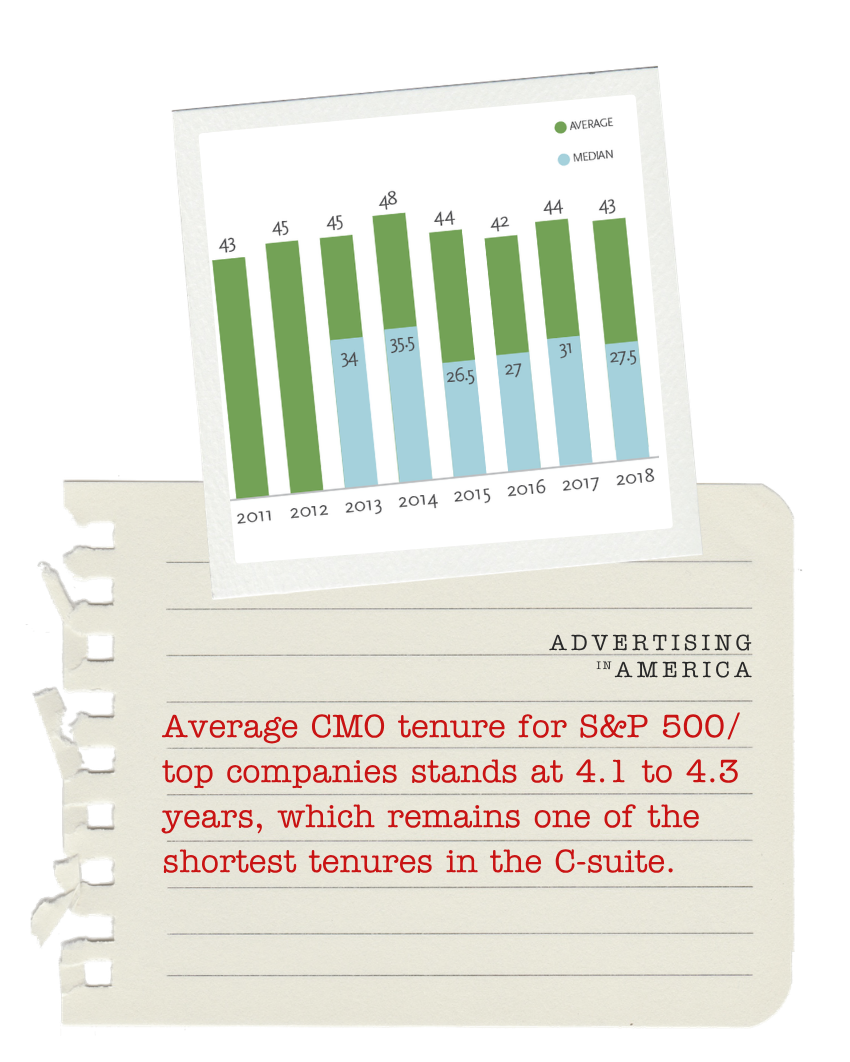
Chris Torbay: And God help you if the agency review was two years before the CEO changed, because now the new CEO's coming in. He's in the first or second year of the new campaign. He already wants to make a difference, but it's only just started, so now he's got to wait to really screws up aany sense.
And that's why I say the greatest threat to the longevity of a great idea, something truly becoming part of the zeitgeist-
Mick Torbay: That could be a 10 or 15-year campaign,
Chris Torbay: That could turn out to be a great idea, is that the new person's gonna want to come in, and with the best of intentions, help make things new and different.
Mick Torbay: Nobody arrives to wreck it. The new person wants to take it to the next level, or be the one who brings the transitions from the last idea to the next idea. The intentions are always good. They're always honorable.
Ryan Chute: Roy H. Williams, our partner, and of course, our mentor, has-
Mick Torbay: Certified crazy person ...
Ryan Chute: …certified crazy person, has been warning against this for years. He's always been of the mind that refreshing the brand is much more about career anxiety than it is about strategy.
Mick Torbay: Agreed.
Ryan Chute: The veteran move, if you inherit a working campaign, extend it. That's the real wisdom that comes into these things.
Chris Torbay: Or what aspect of it can you keep? And I've talked about this in a previous episode. I recently inherited a campaign, and I was obviously brought in to make a difference and do something different, in order to help the brand grow more than it was.
But the answer can't be to throw everything out. The question then becomes an even more difficult one to answer, which is: what is it that I can take from here and continue to do and somehow do in a better way or a different way or a more compelling way where the viewer goes, "Oh, I see what the brand has done," but doesn't break or discard what's been established? Or clashes with the equity that has been established.
Mick Torbay: And evolution is harder to do than a transition.
Chris Torbay: And shows do it all the time. You make the comparison to sitcoms. Sitcoms will get rid of a character, and they'll bring a new character in, or various people will fade in and out. But the show may be better with the new set of characters, but the show continues to be the show. It's not, “Oh, the whole thing's out the window now, and it has a totally different vibe and a totally different feel.”
Ryan Chute: And in some cases they've tried, and the show goes flat and they've realized…
Chris Torbay: Realize that key character was the crux of it.
Ryan Chute: Well, and it's the baby with the bathwater. It's identify, the baby, and make sure you don't throw the baby out with the bathwater.
Mick Torbay: He's always the baby.
Ryan Chute: He is a baby about a lot of things. He is. But he does get his own way. Bored or broken, before you change anything, ask yourself one question. Is this ad boring? Are you bored of the ad yourself, or is it broken? Is the ad not doing the thing that it's supposed to do?
If it's boring, then that's your problem. Stop worrying about it.
Chris Torbay: I'll attach to the bored, do you feel like you're underperforming if you don't do something? It's not just that you're bored with it, but you also feel helpless if you're not making a change, if contributing, in some way.
You have to get comfortable with, “I've inherited this thing. It's working really well. Let me be the steward of it and continue to take it forward,” and that's enough to be the person who didn't break the Campbell's Foodservice's brand after five generations.
Ryan Chute: That's a great example. The ROLEX brand, after however many generations as well, being transferred into professional management, if the audience is fine, let it run. If it's broken, that's the customer response. Now we have to assess that and determine whether or not we need to reinvigorate to change the momentum. But it's not always inclusive of complaints. The optimal number of complaints is never going to be zero on ads. In fact, if you're not getting complaints, that's a signal that it might be broken..
Chris Torbay: Or boring. It is forgettable that nobody bothered to say, "Hey, that offends me."
Mick Torbay: But on, on the topic of broken, sometimes a client will say, or someone on the team will say, “I think we should change the ads," and I will challenge that with the following question.
The reason why you should change the ad is that what we're doing is wrong, and that means it must always have been wrong, and that's okay. You can do it wrong. You can make mistakes in marketing; that's fine. But if it was right before, why would it be wrong now? Otherwise, it's just because you're fucking bored, and it's another way of calling bullshit, because if you're saying this is not right, it's like, then it was always wrong. The reason to change the ad is if it's wrong, or the advertising.
Chris Torbay: Forgive me, unless something fundamental, for advertising changes about your brand, right? And I'm trying to think of an example.
Mick Torbay: Which almost never happens.
Chris Torbay: No, it does sometimes and in which case then you stop calling yourself. You do a name evolution, or you do something like that.
Mick Torbay: Subway had to change their advertising. Fair enough. Fair enough. Sometime, but in my defence, they should never have had that guy on the ad in the first place.
Ryan Chute: Hindsight is 20/20. See, what, guys, this conversation was far less boring than I anticipated. Thank you. I'm very glad to, that we had it. That's a wrap.
Ryan Chute: To wrap things up, if you're running a business in America trying to figure out when to change your ads, here are the three things I'd want you to hitch your wagon to.
One, your customer hasn't started counting yet. Don't change the ads because you're tired of them. By the time you're sick of it, the audience is just starting to figure out that you exist. The clock doesn't start when you start. It starts when they start, and they haven't started yet.
Two, change your ads. Don't change your advertising. Same brand, new episodes. Mac versus PC. Bobby and Mr. Jenkins. The GEICO Gecko. Allstate's Mayhem. The assets stay, the episodes change. That's the move. Anybody who tells you the whole campaign needs a refresh is either bored or a noob, or both.
Three, if you inherit a working campaign, don't kill it just to prove you're working. That's a rookie move. The wise veteran extends a working campaign, writes the next chapter, and takes all the credit when the numbers come in. Famous campaigns don't die from natural causes. They die from imbeciles with a tiny ego.
If you don't hear anything else, hear this: The campaigns we talk about in advertising history weren't great because someone had a great idea once. They were great because someone had a great idea once, and then everybody who came after them had the discipline to not kill them. That's the whole game.
Keep your ads fresh. Keep your advertising consistent. Trust the people you hired, and try to outlive the urge to make your mark.
Until next time, this is Advertising in America. Thanks for tuning in.
Thank you for joining us on Advertising in America. We hope you enjoyed the show and captured a nugget of marketing magic. Want to hear more? Subscribe, leave a review, and share this podcast with your friends. Do you have questions or topics you want us to cover? Join us on our socials at Advertising in America.
Want to spend your marketing budget better? Visit us at wizardofads.services to book your free strategy session with Wizard Ryan Chute today. Until next time, keep your ads enchanting and your audience captivated.
Branding
%20(1).webp)
Instagram Wordmark Rebrand: Logo vs. Service Branding
Discover how wordmarks and logos drive essential service brand recognition. Learn Instagram's rebrand strategy and apply it to your home service business.
In essential service branding, wordmarks and logos serve different jobs: a wordmark, like Instagram's recent typography refresh, carries the full business name for instant recognition, while a logo mark builds shorthand recall. Home service brands need consistent wordmark-logo pairing across trucks, ads, and digital touchpoints so households recognize the name before competitors even enter the search.
Why Did Instagram Just Change Its Font?
Instagram updated its wordmark for the first time in nearly a decade, breaking almost ten years of visual consistency. The platform's designers rebuilt the lettering after hundreds of iterations, testing curves, spacing, and ligatures until the mark felt tied to the creative energy of its users. Nothing about that process was accidental. This Instagram wordmark rebrand shows what disciplined brand evolution looks like at scale. It holds a lesson for local service businesses too.
Is the New Instagram Logo That Different From the Old One?
Not much, and that's the point. Despite months of refinement, the word "Instagram" stays instantly recognizable to anyone scrolling their feed. That balance between fresh and familiar is the real skill: change enough to signal growth, keep enough to protect recall.
What Can Contractors Learn From a Tech Giant's Font Change?
Few HVAC or plumbing companies will ever spend hundreds of design rounds on lettering, but the principle transfers directly. A wordmark vs logo decision isn't cosmetic. It's the front door to brand recall for contractors who need a name to surface first when a furnace dies at midnight.
Service businesses building service business visual identity should borrow Instagram's discipline:
- Refine deliberately, not impulsively. Sudden identity swaps confuse existing customers.
- Protect recognizability while modernizing details.
- Treat typography as strategy, not decoration.
Wizard of Ads for Essential Services applies this same rigour when turning small service operators into household-name branding stories, proof that even a font choice can carry strategic weight.
What's the Difference Between a Wordmark and Logo?
A wordmark vs logo distinction comes down to typography versus symbol. A wordmark spells out a brand name in custom lettering. A logo often relies on an icon, mark, or abstract shape standing apart from the text. Instagram's recent overhaul makes this distinction concrete: the Instagram wordmark rebrand left the app's familiar camera icon largely untouched and rebuilt the lettering itself instead. Typography, not a symbol, became the most noticeable change in the entire redesign.
Instagram's design team abandoned straightforward, generic lettering. Handwriting-inspired strokes and craft-lettering details replaced the old, plain type. That shift matters for contractors: letterforms alone carry enough weight to signal a brand's personality, without needing a new icon at all.
.png)
Why does this matter for a plumbing or HVAC company?
Service trucks, uniforms, invoices, and yard signs display a company name far more often than any icon does. Strong service business visual identity starts with lettering that reads instantly from a moving vehicle or a stapled invoice. A distinctive wordmark builds brand recall for contractors faster than a generic symbol ever could. Prospects register the name, not an abstract mark, at the exact moment they need help.
Wizard of Ads for Essential Services treats typography as strategy, never as decoration. Core competencies span brand-forward marketing, creative storytelling, and media planning, and every wordmark decision flows from that same discipline. Strategy dictates the creative and every channel it touches, keeping call centers, digital content, and mass media visually consistent under one name.
That consistency compounds into household name branding over years of repeated exposure, turning a contractor's truck lettering into a memory trigger long before a competitor's logo registers at all. Wizard of Ads Essential Services builds that consistency on purpose, treating the name itself, not just the icon beside it, as the asset worth protecting.
Why Did Instagram Choose a Wordmark Refresh?
Instagram redesigned its lettering to feel closer to the people who actually use the platform, not to chase a trend. This Instagram wordmark rebrand proves a point that home service owners often miss: identity work isn't decoration, it's strategy. Skip that distinction and a brand blends into the noise of every other contractor truck on the street.
The changes look subtle at first glance. Curves in the letters s, r, and g shifted. Spacing tightened. The way letters connect changed, too. Small moves, but together they gave the wordmark a more personal, crafted feel. Proof that a wordmark vs logo decision carries real emotional weight, even at the level of a single letterform.
Why Does This Matter for a Local Service Business?
Contractors rarely invest this kind of scrutiny into their own service business visual identity. Trucks, uniforms, and signage often get treated as afterthoughts rather than strategic assets.
That gap costs market share. Consider what separates a forgettable local vendor from a name homeowners recall the moment the furnace dies:
- Consistency across trucks, uniforms, digital, and radio builds brand recall for contractors over months, not days.
- Distinctiveness, not just difference, creates the mental shortcut that turns a business into a household name.
- Craft-level detail, the kind Instagram applied to single letters, signals professionalism before a single word gets spoken.
Household name branding starts exactly where Instagram started: at the level of how the brand looks and feels, refined with intention rather than left to chance. Wizard of Ads Essential Services applies that same discipline to the trades.
.png)
What Can Contractors Learn From This Rebrand?
A social media platform's typography overhaul carries a lesson far bigger than font choice: distinctiveness protects memory. Home service business owners who skip this lesson risk blending into a sea of identical logos, trucks, and slogans. And losing the next emergency call to a competitor who looks and sounds different. The rebrand itself matters less than the discipline behind it: refining an identity so it feels unmistakably owned.
For HVAC, plumbing, and electrical contractors, the takeaway is not "redesign the logo." It's understanding wordmark vs logo as a strategic choice, then building every touchpoint. Trucks, uniforms, radio spots, phone scripts, around one unforgettable identity. This is where service business visual identity and sound work together, not apart. Ads written to entertain a busy public, while anchoring memory, turn a routine furnace repair into a moment the customer remembers at 2 a.m. when the heat fails again.
Why does brand consistency matter more than a logo redesign?
Consistency compounds. A distinctive identity applied across every customer touchpoint builds brand recall for contractors faster than a one-time visual refresh ever could. Neuroscience-informed messaging, paired with durable mass media reach, keeps a brand from fading into the same generic noise every competitor produces.
How does sound reinforce visual branding for contractors?
Auditory cues, a jingle, a signature phone greeting, a radio voice, lock identity into memory alongside visuals. Aligning that auditory messaging with brand identity captures leads before rivals even register in the customer's mind.
Contractors chasing household name branding need both dimensions working in concert. Wizard of Ads for Essential Services builds that alignment for essential service brands, proving the same principle Instagram just relearned: distinctiveness, not mere difference, is what makes a name unforgettable.
Why Does Brand Recall Matter for Contractors?
Emotional resonance decides which HVAC or plumbing company a homeowner calls at 2 a.m. when the furnace dies. Contractors who build lasting brand recall for contractors win that moment before a competitor even shows up in a search result. Without that recognition, service businesses fight for scraps in a crowded market where price becomes the only differentiator.
Strategic brand-building produces results that outlast any single ad campaign. One HVAC brand grew its revenue substantially after owning its local airwaves through a strategic rebrand paired with memorable radio creative. That growth came from consistent presence in the customer's mind, not from a lucky lead-gen month.
Does Brand Recall Actually Drive Revenue?
Recall works because familiarity shortcuts decision-making under stress, and a broken water heater is stressful. A track record spanning 211 happy clients, 109,033 ads produced, and pricing that varies by billions in media buys demonstrates that recall-driven strategy scales across markets and trade categories, not just isolated wins.
Which Trades Benefit Most From Recall-Based Branding?
Home service and essential service categories, HVAC, plumbing, electrical, and related trades. Depend on recall more than most industries because purchases happen infrequently and urgently. Homeowners rarely comparison-shop a burst pipe; they call the name they already trust. Wizard of Ads Essential Services built its entire practice around this reality, treating recall as the core growth lever for contractors rather than a branding afterthought.
The math favors owners who invest early. Contractors chasing pay-per-click leads pay repeatedly for the same prospect's attention. Contractors who build durable recall get remembered for free, appearing first in the customer's mind long before any search box opens.
How Do You Build a Household Name Brand?
Trusted local names earn their status through consistent strategy, not one flashy redesign. Service business owners who chase quick-fix taglines or seasonal promotions rarely outlast competitors who invest in household name branding year after year. The strongest local brands share one trait: they commit to long-term recognition instead of short-term gimmicks, becoming the trusted name their market reaches for first.
.png)
Wizard of Ads for Essential Services builds this kind of recognition by converting service-based companies- HVAC, plumbing, electrical- into household-name brands. The approach relies on brand-forward strategy paired with neuroscience principles that lodge a company's identity into memory through sound, story, and repetition. That combination drives stronger brand recall for contractors than a logo swap or a cheaper price point ever could.
Does a Logo Redesign Build Brand Recall?
A logo change alone rarely moves the needle. Even a high-profile Instagram wordmark rebrand proves the point: refining letterforms improves aesthetics, but recognition depends on far more than typography. Contractors need a full-service business visual identity. Consistent voice, media presence, and customer experience work together, not a single visual update in isolation.
What Does the Brand-Building Process Involve?
Building recognition follows a defined sequence rather than guesswork. The engagement moves through six phases:
- Uncover — on-site discovery of the brand's true position
- Research — market and audience analysis
- Write — strategic creative development
- Buy — media planning and negotiation
- Approve — client sign-off before launch
- Launch — full campaign rollout across channels
Ryan Chute leads the team executing every phase, aligning creative, media buying, and daily operations so recall gets embedded into each campaign. That distinction: wordmark vs logo thinking versus full brand-system thinking. Separates contractors who fade into the directory listings from those who become the name everyone remembers first.
Why Ditch Yellow Pages Thinking for Modern Branding?
Printed directories once served as the only map to local trust. For decades, homeowners flipped through thick books to find restaurants, plumbers, and other household services. That model collapsed the moment search engines entered the picture. Print directories vanished from homes almost overnight once Google became the default tool for the Yellow Pages. Contractors clinging to the old playbook, hoping a listing alone builds trust, are fighting a battle that ended years ago.
Search behavior tells the real story. A homeowner with a broken furnace no longer digs through a dusty book. The reflex now is a phone in hand and a quick Google search for a nearby solution. That shift changes what actually earns a callback. A business survives on brand recall for contractors. The instant recognition that surfaces in a customer's mind before the search bar even opens.
What replaced the Yellow Pages for finding local services?
The internet now covers the entire customer journey, not just emergency lookups. Homeowners use it for routine maintenance tips, seasonal reminders, and locating an HVAC contractor during a true crisis. This broader role means a company's online presence must work harder than a single directory listing ever did.
Does a logo alone build that recognition?
A logo marks a business; a wordmark vs logo distinction matters because full brand identity spans messaging, tone, and consistency across every touchpoint. Modern service business visual identity requires:
- Consistent visual and verbal identity across web, radio, and truck signage
- Messaging that sticks in memory before a need arises
- A distinctive story, not a generic listing
Directory thinking treats visibility as a checkbox. Household name branding treats it as the entire business strategy.
Why does distinctive branding matter for contractors specifically?
Homeowners used to dig through thick, dusty directory books when a furnace failed at 2 a.m. That search behavior is gone. Today's homeowner searches digitally and picks the name already lodged in memory. Proof that brand recall for contractors now decides who gets the call before the competition even shows up.
The building blocks work together, not in isolation:
- Media strategy that bypasses volatile PPC costs
- A compact, accountable team executing without bureaucratic drag
- Post-launch refinement that keeps mass media campaigns aligned
- Digital-era visibility replacing obsolete directory-based discovery
Each element reinforces the next, turning a regional contractor into the name homeowners remember first.
The wordmark versus logo decision ultimately hinges on your essential service brand's commitment to memorability and market presence. Whether you choose a refined wordmark that anchors your name or a distinctive logo that transcends language, the strategic imperative remains constant: your visual identity must align with your positioning, resonate with your audience at the moment of need, and sustain recognition across every customer touchpoint. The strongest rebrand strategy treats this choice not as a design preference. As a foundational element of your brand architecture—one that supports long-term equity and competitive advantage in your market.
FAQ
What is the difference between a wordmark and a logo?
A wordmark spells out the brand name in custom lettering. A logo typically uses an icon or abstract shape apart from the text. Instagram's rebrand kept its camera icon untouched and redesigned only the lettering.
Why did Instagram change its wordmark?
Instagram refreshed its typography for the first time in nearly a decade, testing hundreds of iterations of curves, spacing, and ligatures. The goal was to reflect the platform's creative energy while keeping the name instantly recognizable.
What can home service businesses learn from Instagram's rebrand?
Contractors should refine branding deliberately rather than impulsively, protecting recognizability while modernizing details. Wizard of Ads for Essential Services applies this same discipline to turn service operators into household names.
Lead Generation
.webp)
The Ultimate Guide to Google Business for Business Owners
Unlock the full potential of your business with our ultimate guide to Google Business. Boost visibility, attract customers, and optimize your profile today!
Google Business Profile Optimization: The Complete Guide for Business Owners to Maximize Local Visibility and Lead Generation
In an increasingly digital world, establishing a strong online presence is essential for businesses to attract local customers effectively. A Google Business Profile (GBP) serves as a vital tool, enhancing visibility on search engines and maps, thus allowing potential customers to find essential information quickly. This comprehensive guide outlines everything business owners need to know about setting up, optimizing, and managing their Google Business Profile to drive lead generation and local engagement. Many businesses often fail to take full advantage of their GBP, missing out on significant opportunities for attracting clients. By leveraging the insights in this article, you'll understand how to enhance your GBP effectively and create a robust online presence that converts inquiries into leads. We will dive into topics including the setup and verification process, optimization strategies, local SEO, and best practices for maintaining your profile.
What is Google Business Profile and Why Does It Matter for Business Owners?
Google Business Profile is a free tool offered by Google that allows businesses to manage their online presence across Google, including Search and Maps. Business owners can create a profile that displays essential information such as location, hours, and services. By utilizing GBP, businesses enhance their local visibility, making it easier for customers to discover them when searching for relevant services nearby. This increased visibility plays a crucial role in customer engagement, driving traffic to websites, and ultimately boosting lead generation through local outreach.
Managing a GBP provides business owners with an opportunity to connect directly with customers. It allows them to respond to reviews, post updates, and upload photos that showcase their offerings. A well-managed Google Business Profile not only builds consumer trust but also increases the likelihood that potential customers will choose your services over competitors.
The profound impact of Google Business Profile on local businesses cannot be overstated, as it directly influences how potential customers discover and engage with services in their vicinity.
.png)
How Does Google Business Profile Enhance Local Business Listings?
Google Business Profile enhances local business listings by ensuring that search results reflect accurate and updated information. With GBP, businesses can optimize their visibility in local searches through relevant categories and by providing comprehensive details about their services. Local SEO techniques integrated within GBP, such as utilizing keywords specific to services offered, directly contribute to higher rankings in search engine results.
Additionally, GBP enables businesses to manage their information actively, ensuring that potential customers have access to the latest updates regarding services, special offers, or changes in operations. The integration of customer reviews into search results further enhances a business's profile, impacting reputation and engagement. By responding to reviews promptly, businesses signal their commitment to customer service and satisfaction, creating a favorable impression on prospective clients.
The strategic implementation of Local SEO through Google Maps significantly boosts a business's digital presence and helps convert online visibility into actual customer visits.
Local SEO on Google Maps for Increased Business Visibility
In today’s digital era, consumer behavior in searching for building materials and home renovation services has shifted to digital platforms, especially Google Maps. Traditional building material businesses still lag behind in digital visibility and often lose competitiveness against modern building depots. This community service activity aims to help traditional MSMEs survive and grow through digitalization by increasing business visibility and customer footfall conversion. This study applied a local Search Engine Optimization (SEO) approach through a case study of a building material MSME. The research stages included initial observation of the business profile and customer visits, implementation of Local SEO optimization strategies, and final observation to evaluate the resulting changes. Optimization strategies included completing business information, applying local keywords, adding visual content, and actively managing customer reviews. The novelty of this researcImplementation of local seo on google maps for increasing footfall conversion in building store business, 2026
What Are the Key Benefits of Managing Your Google Business Profile?
Managing a Google Business Profile comes with several key benefits, including:
- Increased Visibility: Regularly updating your GBP ensures that your business appears in relevant local searches, making it easier for potential customers to find you.
- Enhanced Customer Trust: Engaging with customer reviews and posting updates demonstrates your commitment to being transparent and responsive, fostering trust.
- Improved Lead Generation: With an optimized GBP, the chances of attracting local leads significantly increase as potential customers find the information they need readily available.
The management of your Google Business Profile plays a crucial role in ensuring your business is represented accurately online. Moreover, it opens the door to analytics and insights that help you understand customer interactions and preferences, which can inform future business decisions.
How Do Business Owners Set Up and Verify Their Google Business Profile?
Setting up a Google Business Profile is straightforward and requires several key steps.
- Create a Google Account: If you do not already have a Google account, you need to create one.
- Set Up Your Business Information: Enter essential details such as your business name, address, phone number, and website URL.
- Verification: Google requires verification to ensure that business information is accurate. Verification can occur via postcards, phone, email, or instant verification for eligible businesses.
Step-by-Step Guide to Set Up Google Business Profile
To further clarify, here’s a detailed look at how to set up your GBP:
- Go to the Google Business Profile page and click on “Manage now.”
- Sign in with your Google account or create a new one if necessary.
- Enter your business information, including business name, address, and service area.
- Choose the correct categories that best represent your business for customers to find you more easily.
- Add contact details and a website link to improve connections with potential customers.
- Complete the profile with images and business hours, providing a comprehensive view of what you offer.
- Verify your listing using one of the methods mentioned above to activate your profile for public view.
Successful verification confirms that you are the owner of the listed business and allows management of your profile effectively.
Getting your business listed on Google Maps is a crucial, mostly free, and straightforward process that can determine whether potential customers find you in their immediate search.
Getting Your Business on Google Maps for Local Customers I pulled up my phone last week to find a coffee shop in an unfamiliar neighborhood. Within seconds, I had four options with ratings, photos, hours, and directions. The whole process took maybe 15 seconds.That’s the reality of how people find local businesses now. Nobody’s flipping through phone books or asking random strangers for directions. They search, they tap, they arrive. If you want to get your business on Google Maps and show up in that 15-second window, the work is mostly free, mostly one-time, and more straightforward than most owners assume. Skip it and you don’t exist to that potential customer.
How Can Business Owners Optimize Their Google Business Profile to Drive More Leads?
Optimizing your Google Business Profile involves several strategies to ensure that your listing stands out and effectively attracts local customers.
- Complete Your Profile: Ensure all fields are filled out, including business hours, contact information, and a description of services. The more complete your profile, the more trustworthy it appears.
- Utilize Local Keywords: Integrate relevant local SEO keywords into your business description and posts to improve search engine visibility and attract targeted traffic.
- Engage Customers with Updates: Regularly post updates about services, special promotions, and business announcements to maintain engagement with your audience.
These strategies can significantly enhance your GBP's performance, ultimately leading to increased inquiries and business growth.
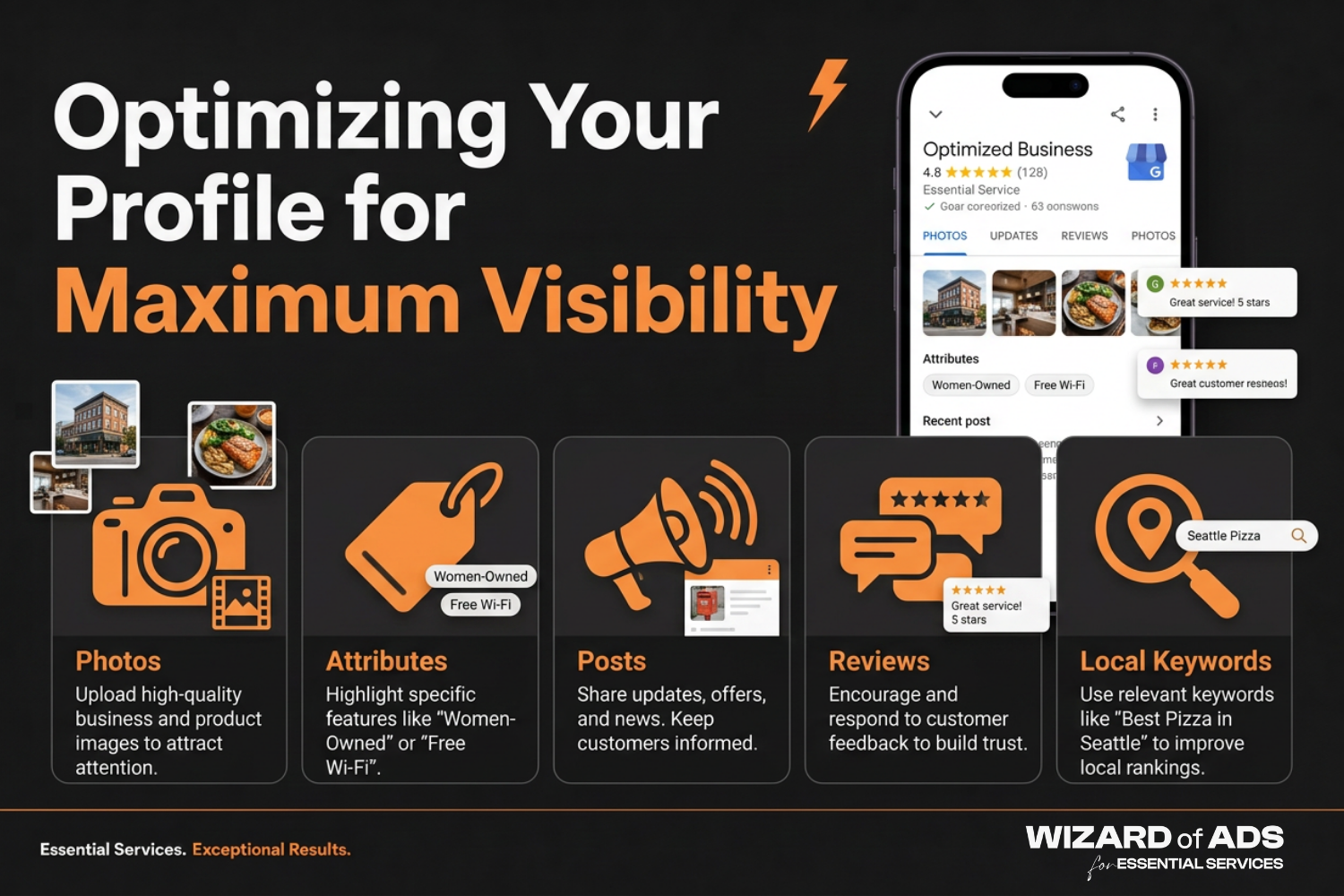
Which Profile Elements Should Be Enhanced: Photos, Attributes, and Posts?
Visual elements of your GBP play a vital role in attracting potential customers. High-quality photos of your business, products, or services enable visual storytelling that engages visitors. Additionally, it is essential to regularly update your profile with relevant posts about special offerings or events. Engaging visual content leads to improved customer interactions and can motivate users to visit your business.
- Photos: Upload diverse and high-quality images that represent your brand.
- Attributes: Specify attributes that describe your business, such as "women-owned" or "free Wi-Fi," enhancing appeal to specific customer segments.
- Posts: Share news or promotions directly on your profile to keep customers informed and engaged.
How to Effectively Manage and Respond to Online Reviews for Reputation Growth?
Online reviews are a critical component of managing your Google Business Profile. They influence potential customers’ perceptions and can impact search rankings.
- Soliciting Reviews: Encouraging satisfied customers to leave positive reviews can improve your business's visibility and reputation.
- Responding Promptly: Actively respond to both positive and negative feedback to show customers you value their input, fostering goodwill.
- Using Reviews for Social Proof: Highlighting favorable reviews in your marketing and on your website reinforces consumer trust and credibility.
Proactive management of online reviews underscores your commitment to customer satisfaction and can lead to sustained business growth.
What Local SEO Strategies Leverage Google Business Profile for Market Advantage?
Implementing effective local SEO strategies alongside GBP can significantly enhance market presence. Key strategies include:
- Citations and Consistent NAP: Ensure your business name, address, and phone number (NAP) are consistent across all online platforms to boost local search performance.
- Building Backlinks: Develop backlinks from reputable local websites or blogs to strengthen authority and improve search rankings.
- Engagement Through Social Media: Promote your Google Business Profile on social media platforms to drive traffic and improve visibility.
Integrating local SEO strategies with your GBP maximizes its potential to attract relevant clients and grow your customer base.
Which Contractor-Specific Case Studies Demonstrate Successful GBP Use?
Several contractors have successfully leveraged Google Business Profile through strategic optimization and management. For instance, one contractor saw a 40% increase in inquiries after optimizing their GBP with local keywords and high-quality images. Another company experienced improved customer engagement and trust levels by consistently responding to reviews and maintaining an active profile. These examples illustrate that businesses that commit to managing and optimizing their Google Business Profile can generate notable results in attracting and converting local leads.
How Do Business Owners Monitor, Update, and Measure the Impact of Their Google Business Profile?
Monitoring and measuring the effectiveness of your Google Business Profile involves utilizing various tools and metrics to analyze performance.
- Google Analytics: Leverage insights from Google Analytics to track traffic and user behavior stemming from your GBP.
- Monitoring Reviews: Keep an eye on online reviews to gauge customer sentiment about your business and identify areas for improvement.
- Reviewing Business Insights: Regularly check GBP insights to understand how customers find your listing, engaging with various profile elements.
What Tools and Metrics Track GBP Performance and Local Visibility?
To effectively track GBP performance, consider the following tools and metrics:
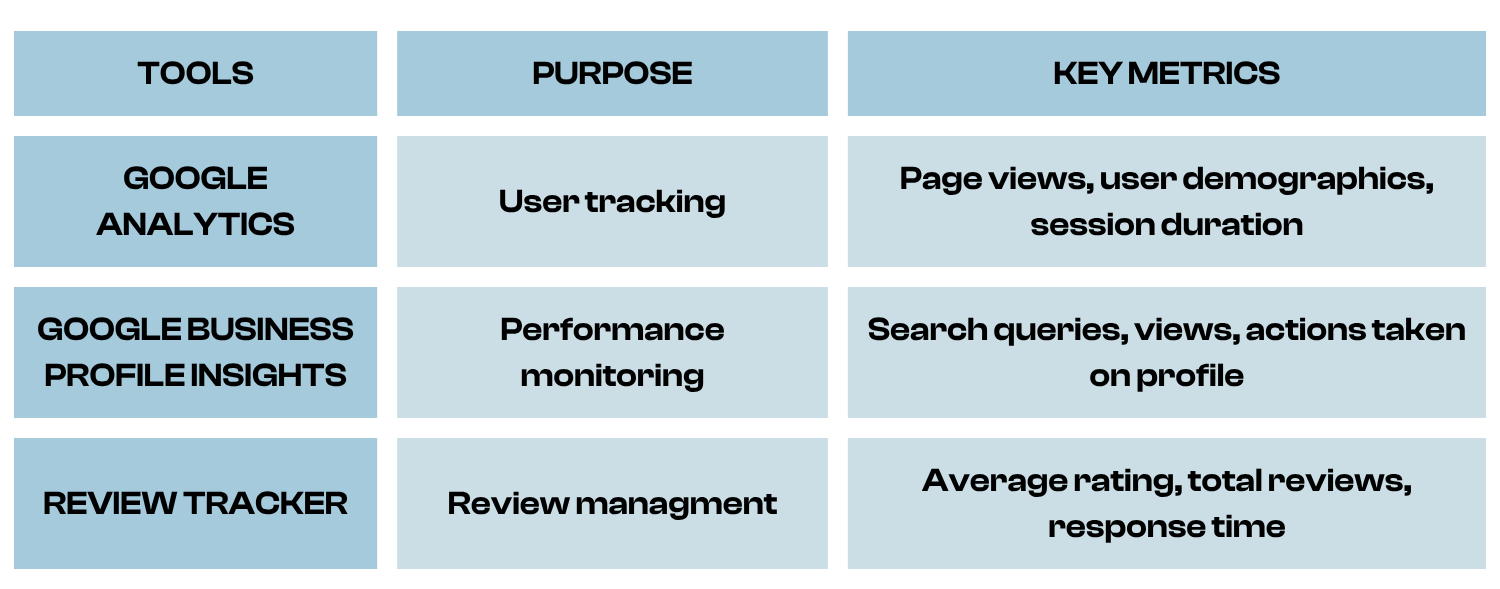
These tools provide insight into the performance of your GBP, enabling continuous improvement and effective engagement strategies with local customers.
How Often Should GBP Content and Structured Data Be Updated for Optimal Results?
Regular updates are critical to maintaining the effectiveness of your Google Business Profile. Frequent updates to essential information, such as hours of operation or promotions, ensure that potential customers have access to the latest offerings.
- Updating Crucial Business Information: Whenever there is a change in hours or services, these should be reflected immediately on your GBP.
- Seasonal Promotions: Regularly refresh your GBP with seasonal offers that can attract customer interest based on current trends.
- Engagement Strategies: Regularly engage with customers through posts and responses, creating a dynamic, interactive profile.
Consistent updates not only benefit customer engagement but can also influence local search rankings positively, driving more traffic to your business.
.png)
Start by Reviewing Your Own Profile's Completeness
A well-optimized Google Business Profile, backed by complete business information, high-quality photos, active review management, and consistent local SEO citations, remains the most direct way for business owners to appear in local search results and turn nearby searchers into leads. From setup and verification through profile optimization, local SEO strategy, and ongoing performance monitoring via GBP Insights, each element reinforces the trust and visibility that convert a search into an inquiry. Business owners who manage their Google Business Profile as an active, evolving marketing asset, rather than a one-time listing, see the strongest gains in engagement, local visibility, and lead generation. Start by reviewing your own profile's completeness and activity today, and build from there.
No results found!
Frequently asked questions
Questions? We’ve got answers.
Why Wizard of Ads for Services?
Are you ready to transform your business into a distinctive, emotionally resonant brand? Here's why hiring Ryan Chute, Wizard of Ads for Essential Services is the game-changer your business needs:
Distinctiveness Beyond Difference: Your brand must be distinctive, not just different, to stand out. We specialize in creating an emotional bond with your prospects to make your brand unforgettable.
Building Real Estate in the Mind: Branding with us helps your customers remember your brand when they need your service again, creating a lasting impression.
Value Proposition Integration: We ensure that your brand communicates a compelling value proposition that resonates with your audience, creating a powerful brand-forward strategy.
Who Should Work with The Wizard of Ads for Services?
Wizard of Ads for Essential Services start by understanding your marketing challenges.
We specialize in crafting authentic and disruptive brand stories and help build trust and familiarity with your audience. By partnering with Ryan Chute, Wizard of Ads for Essential Services, you can transform your brand into one people remember and prefer. We understand the power of authentic storytelling and the importance of trust.
Let us elevate your marketing strategy with our authentic storytelling and brand-building experts. We can take your brand to the next level.
What Do The Wizard of Ads for Services Actually Do?
Maximize Your Marketing Impact with Strategic Alignment.
Our strategy drives everything we do, dictating the creative direction and channels we use to elevate your brand. Leveraging our national buying power, we ensure you get the best media rates for maximum market leverage. Once your plan is in motion, we refine our strategy to align all channels—from customer service representatives to digital marketing, lead generation, and sales.
Our goal is consistency: we ensure everyone in your organization is on the same page, delivering a unified message that resonates with your audience. Experience the power of strategic alignment and watch your brand thrive.
What can I expect working with The Wizard of Ads?
Transform Your Brand with Our Proven Process.
Once we sign the agreement, we visit on-site to uncover your authentic story, strengths, and limitations. Our goal is to highlight what sets you 600 feet above the competition. We'll help you determine your budgets and plan your mass media strategy, negotiating the best rates on your behalf.
Meanwhile, our creative team crafts a durable, long-lasting campaign designed to move your brand beyond mere name recognition and into the realm of household names. With an approved plan, we dive into implementation, producing high-quality content and aligning your channels to ensure your media is delivered effectively. Watch your brand soar with our comprehensive, strategic approach.
What Does A Brand-Foward Strategy Do?
The Power of Strategic Marketing Investments
Are you hungry for growth? We explain why a robust marketing budget is essential for exponential success. Many clients start with an 8-12% marketing budget, eventually reducing it to 3-5% as we optimize their marketing investments.
While it takes time to build momentum, you'll be celebrating significant milestones within two years. By the three to five-year mark, you'll see dramatic returns on investment, with substantial gains in net profit and revenue. Discover how strategic branding leads to compound growth and lasting value. Join us on this journey to transform your business.
Ready to transform your world?
(do it - you
deserve this)
deserve this)